
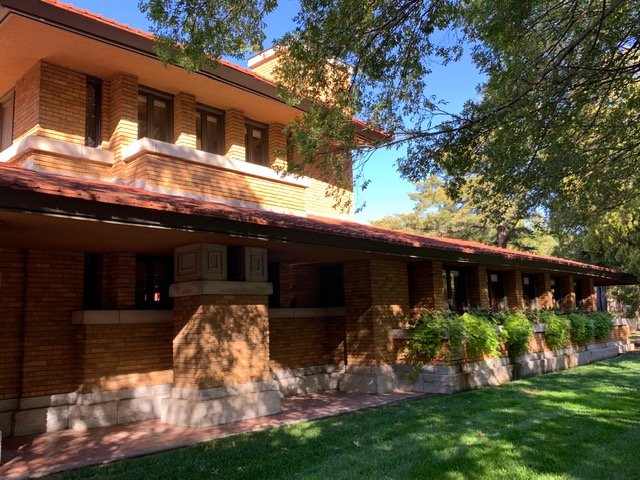
I have always loved architecture, and I think that’s why I enjoy European cities so much. Looking at each city as a whole, and the planning (or lack thereof) that went into them, the magnificent cathedrals, the individual architects and schools (such as Anton Gaudi in Barcelona), have always fascinated me. Here in the United States, Frank Lloyd Wright has always been a designer that is synonymous with the early 1900’s. I tend to think of his designs as a mixture of Arts and Crafts and Art Nouveau, but he truly is a style all on his own.
When I was in Wichita last October (2021) I was amazed to learn that there was a Frank Lloyd Wright house here in town. I looked into it, and realized it was only a mile or two from my cousin’s house. The tours were all full, but we drove by it (with me practically drooling on the car windows to get closer), and I made it my mission to go see it this year. I made my reservations a full month before my trip, and ordered the book and another on Wright’s public places throughout the country from the gift shop online.
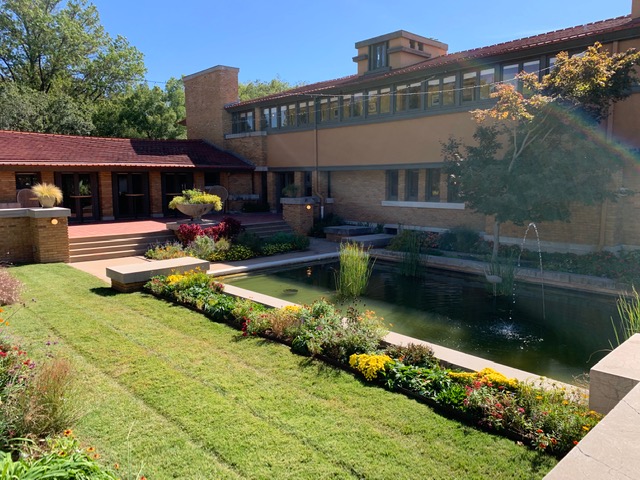
So, 10am sharp, the day after I arrived, I presented myself at the Allen House for a tour. There is a website and book dedicated to the house, the Allen family, and the history – www.flwrightwichita.org – that will give you much more information on the house and times than I can, so I’ll just stick to my thoughts and some interesting facts.
The first thing that struck me is that this is a house in a neighborhood, and it was lived in. We see it as a museum now, like many Wright homes, but it was truly designed, built and used as a home. All of the residences in the neighborhood, College Hill, were being built at the same time, roughly 1915-1918. So the Allen home was one of many larger, high end houses going up. The area is still a very nice residential area, filled with large structures, very distinctive of the period.
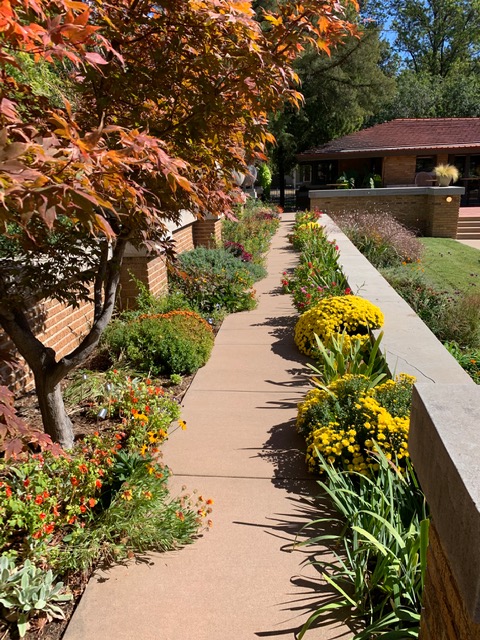
Unlike the more typical houses in the area, the Allen House does not have a front porch. Frank Lloyd Wright liked to hide his front doors, so as not to break the lines of the house. The house is one of his last Prairie Style homes. It’s long, low, and seems to blend with the grounds. He used local materials throughout. And the grounds blend with the house, and the exterior flows into the interior.
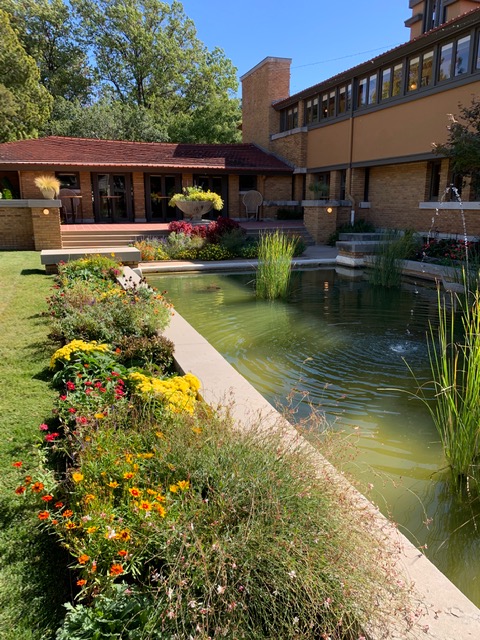
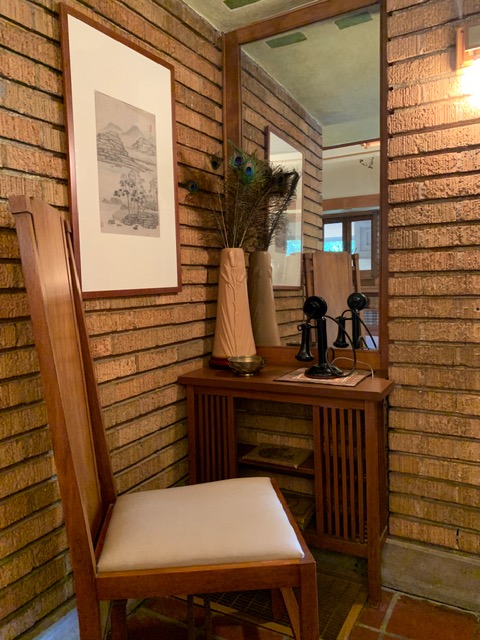
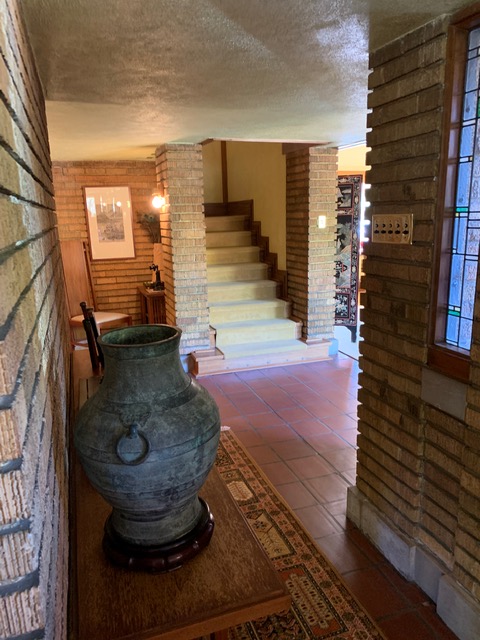
And the house literally does flow. The stone on the outside is echoed inside. The picture below, showing the entry hall, illustrates clearly how the brick pillars are the same inside and out, and are just one piece, flowing from outside to inside.
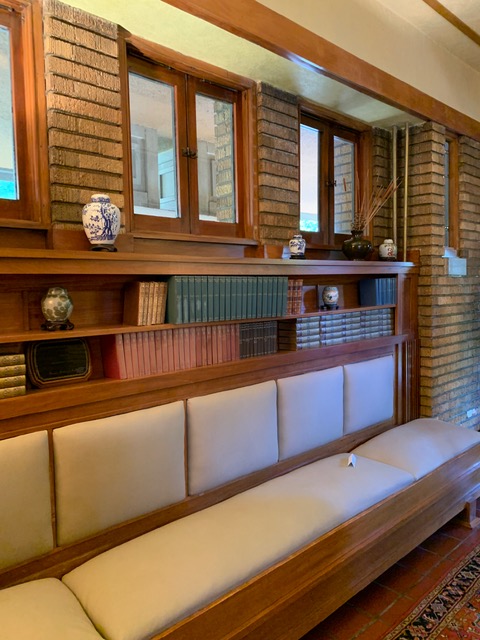
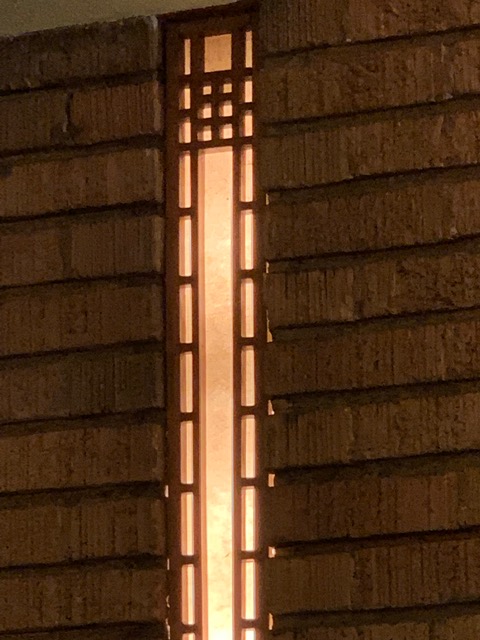
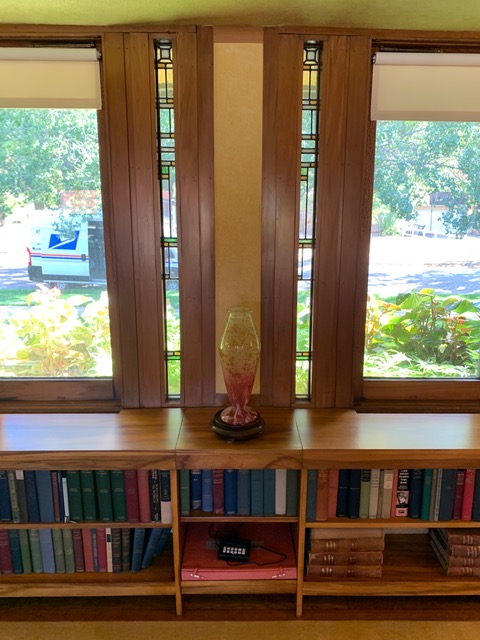
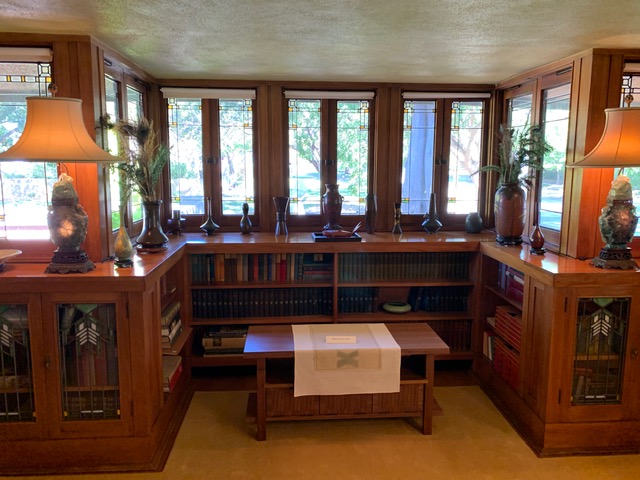
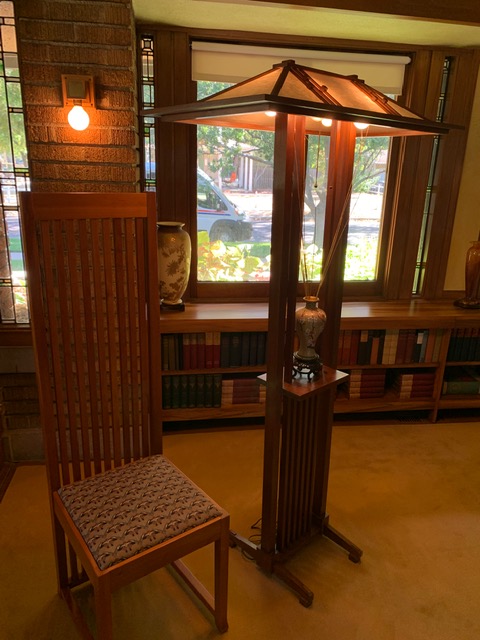
Other elements are the same. The shapes of the art glass are seen throughout all parts of the house. The same wood was used throughout. The walnut has faded to a mellow color, but at the time of building was actually quite dark. The furniture and textiles were designed by Wright to blend into the house itself and were of the same walnut wood.
Wright also designed the house to be easy to live in. He used wall hung toilets in the bathrooms, included a central vacuuming system, an open airy kitchen, and turrets in the upstairs bathrooms that he called the ‘nostrils of the house’ for ventilation (see picture below). Remember that this was a house built in 1916-1918. Had he patented many of these designs, he would have been a rich man.
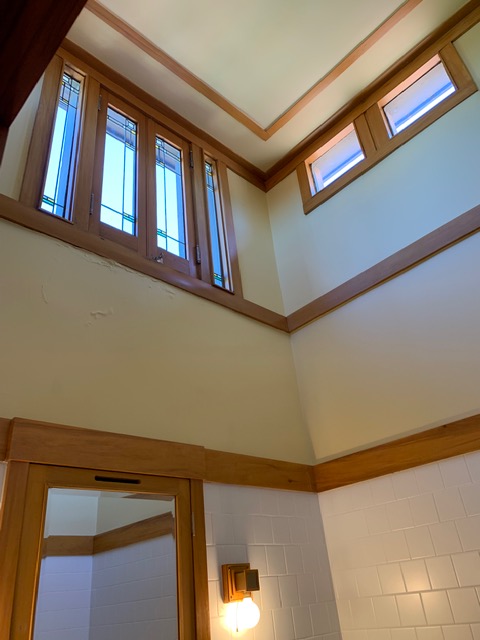
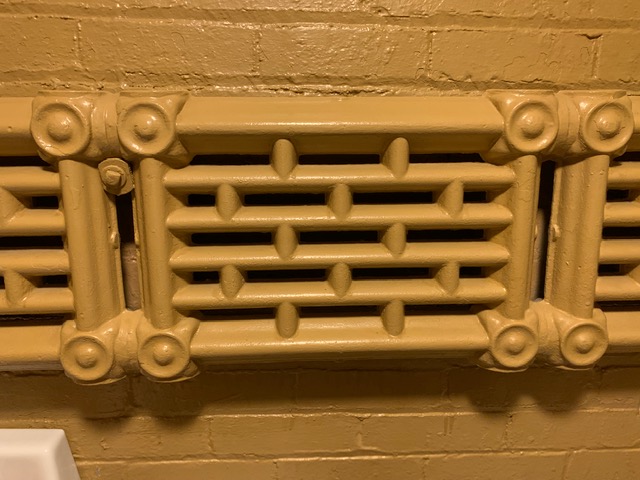
Ventilation was an issue as the climate varies greatly in Wichita. The house was oriented perfectly for air movement and didn’t require air conditioning. Radiators were cleverly hidden and kept the house warm. Although they were hidden, the radiators were designed carefully as was everything else. In the garage restroom, they are uncovered, and are, not surprisingly, are just as aesthetically pleasing (see picture below). There literally isn’t a square inch in that house and garden that isn’t purposefully designed to be part of the whole.
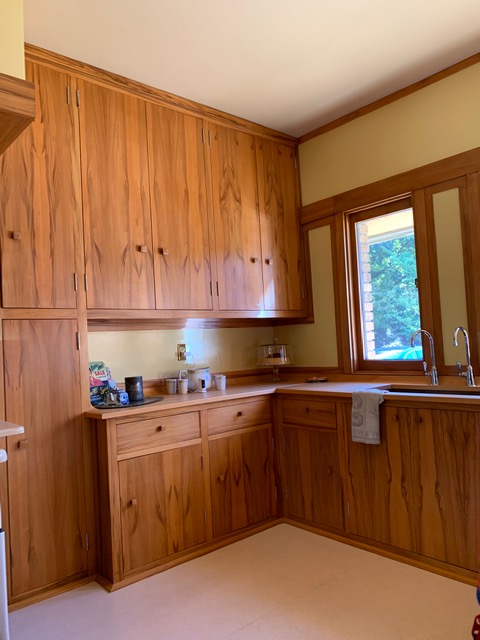
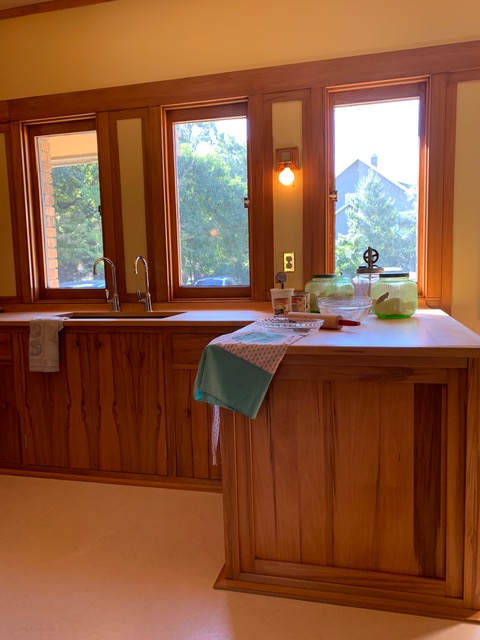
None of the wood was painted. To Wright, that was a sacrilege. And even areas of the house that were not seen by the public (servants’ areas, the kitchen, etc.) were just as beautiful, and flowed just the same as everywhere else. (Pictures of the kitchen below)
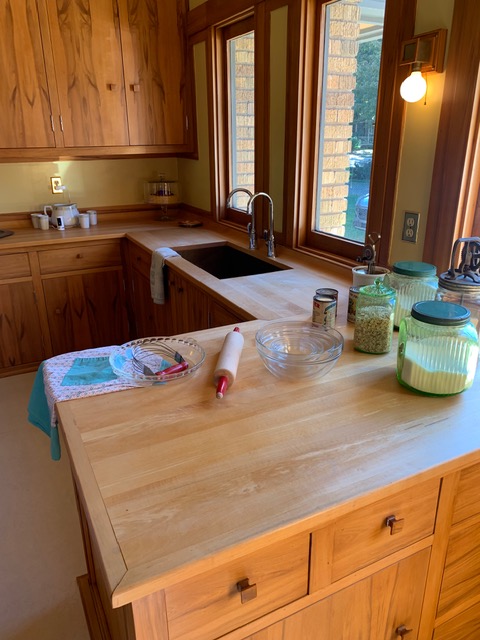
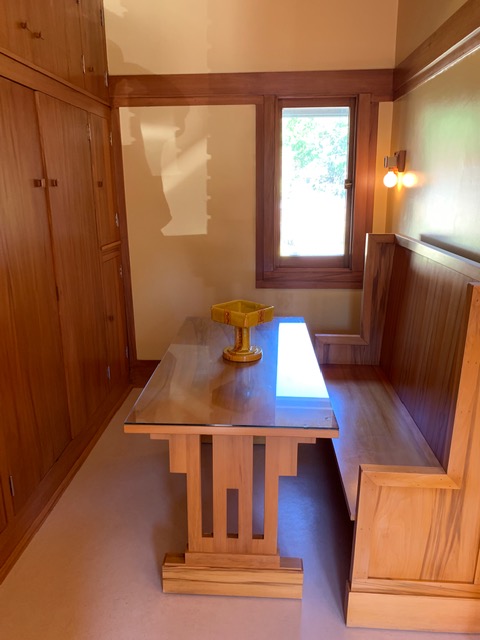
The house has been under restoration since 1990, when it was set up as a private foundation for the preservation and study of Frank Lloyd Wright. Since then, they have endeavored to restore it to its original design. They have collected much of the original furniture, books and original artwork, and resorted the walls and brickwork. Although it will never be exactly as it was built, as time has taken its toll, much has been done.
One of the things that fascinated me was the brick work. The same light tan brick was used inside and outside of the house and was etched in a vertical pattern. The mortar (ALL of the mortar) was gilded a metallic gold. There are only a few places that the gilding has not faded with time and can be seen. One place is where mirrors that had been glued over the fireplace mantle were removed. (Remember people lived here. And redecorated.) This must have been incredible when the sun hit the house. It must have just glowed!

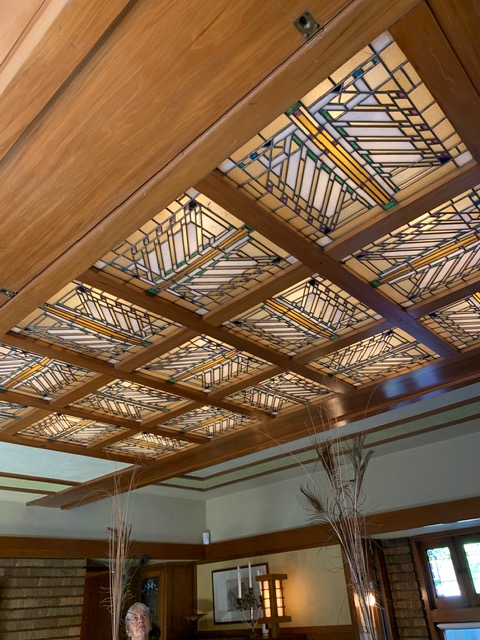
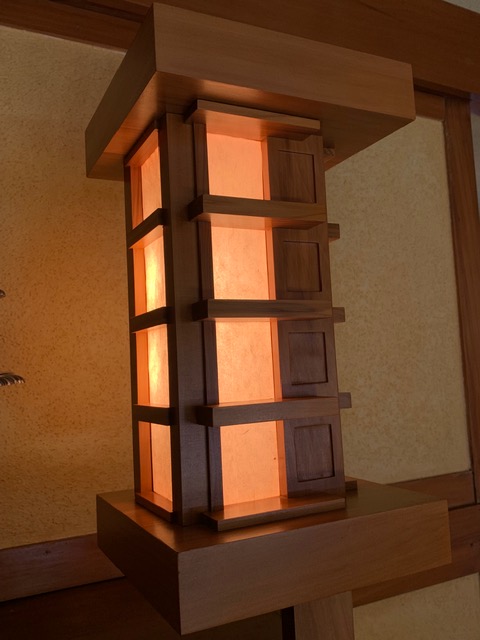
The ceilings were another area of the house where no detail was missed. Subtle and elegant, they were a combination of paintwork, wood and glass. Each ceiling and light fixture are different from the others, yet all part of a whole. The sections of paint were done by a process Wright called ‘scrumble’. Some sections were first painted a bright robin’s egg blue. Then painted over in cream, with the paint wiped before it was completely dry. Wright called this ‘cloudy sky’. Other sections were just a lovely cream.
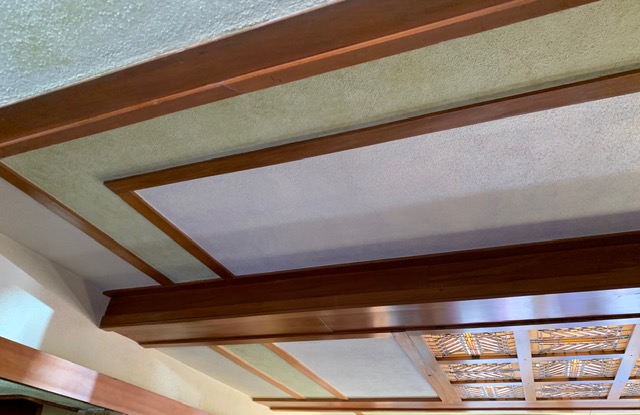
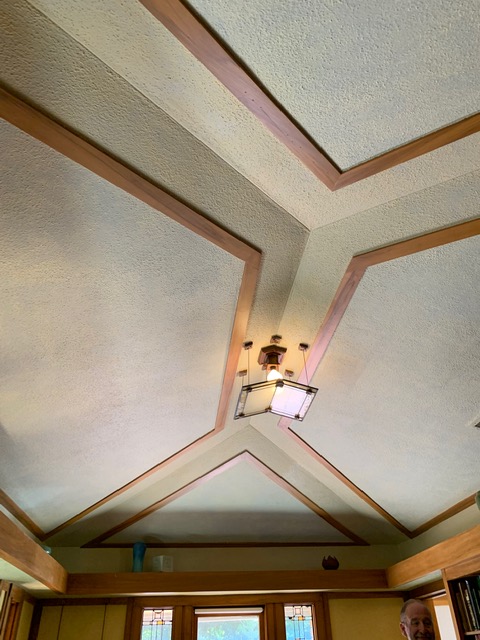
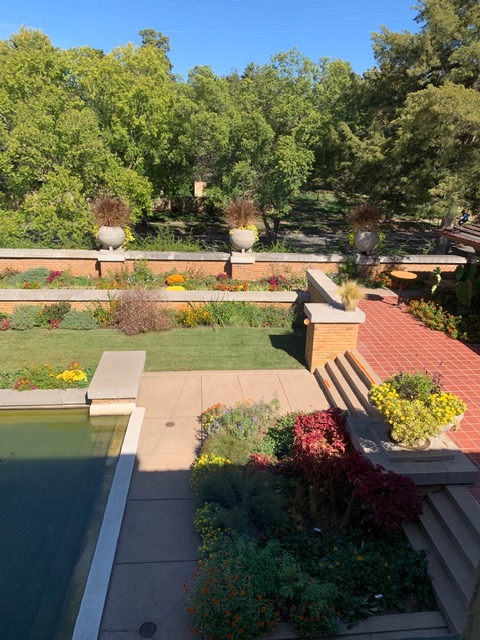
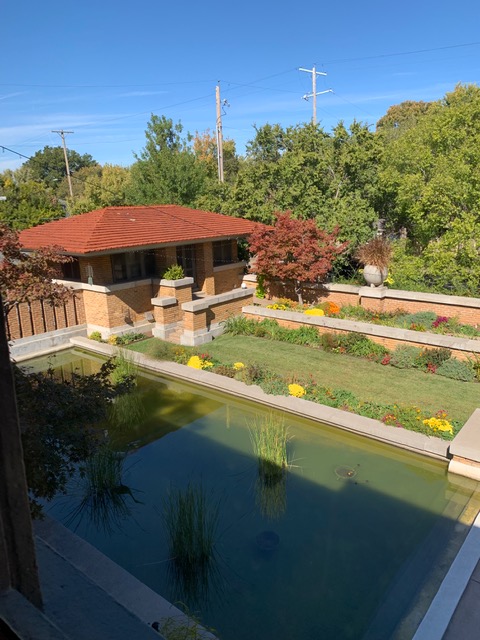
Not a detail was missed. The tour guide mentioned that Wright designed the house from the perspective of a seated person, so the lines of sight were based on that premise. Another fascinating fact was the fact that the small hall into the main living area had a lower ceiling than the rest of the house, making the huge living room seem even bigger. The living room flowed out to the gardens and the pond. When the French doors were opened, the spectacular gardens became part of the living space.
There were many other tidbits and things I learned about Wright and the Allen House, but I would just suggest you take the Grand Tour at the house and learn for yourself. It is well worth your while!
Lots more pictures of both the interior and exterior below:


 Suzanne’s Travels
Thank you for posting. These are lovely photographs of the Allen House.
LikeLike