
Stirling and Linlithgow Castles
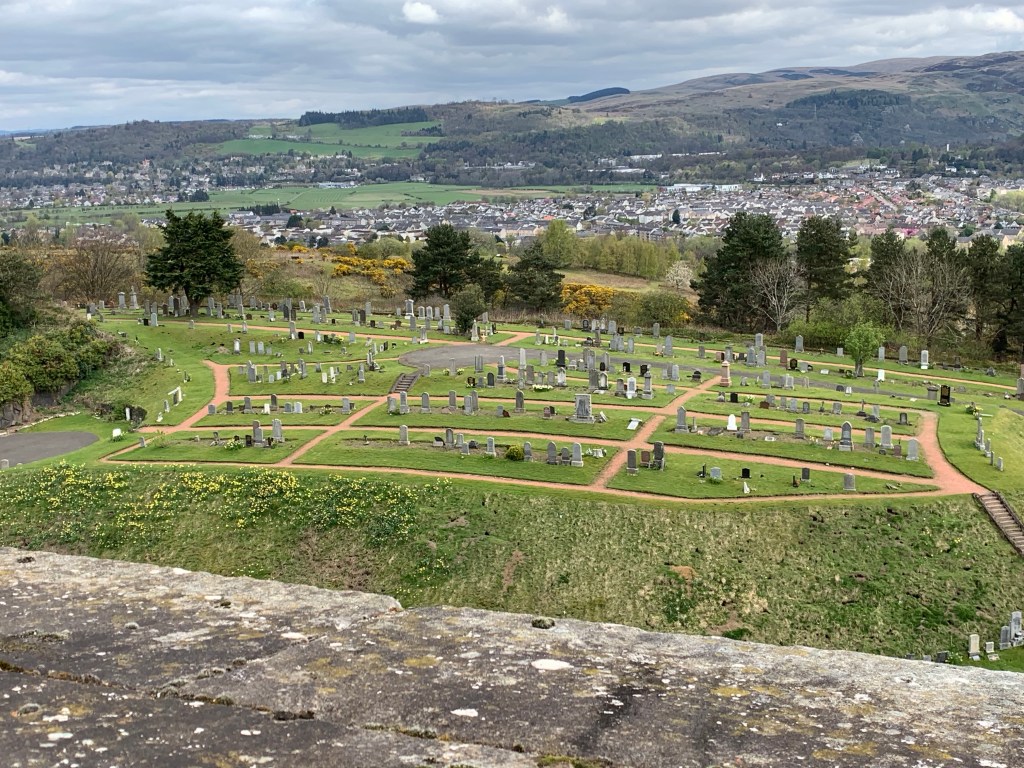
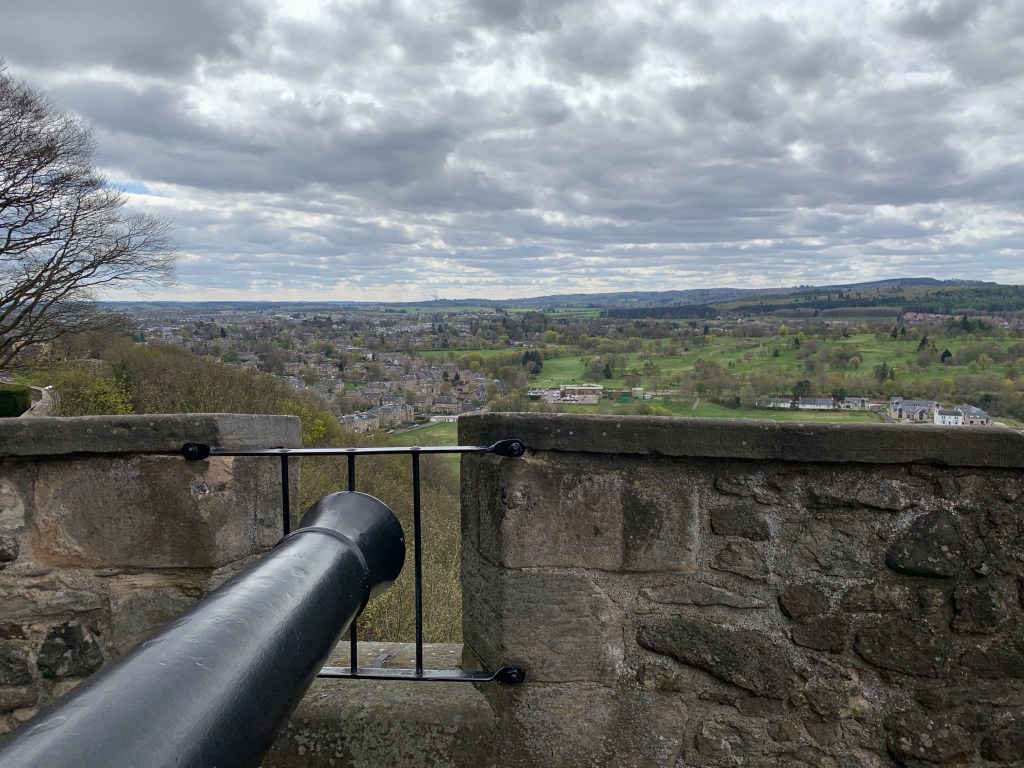
(View from Stirling Castle.)
Today was a day trip to Stirling Castle and Linlithgow Castle. The morning was a repeat of Sunday, complete with calling a cab because the buses weren’t coming, only to see them all come as a bunch as we got in the cab. Ah, well. Such is life.
Faces are more familiar as the week goes on, and it’s fun to see people we’ve met earlier as we loaded up and got going. The coach took us to Stirling by way of Dunfermline (the birthplace of Dorothy Dunnett). To get there we crossed the Queensferry Crossing, a large cable bridge crossing the Firth of Forth, into Fife (Dunfermline). The bridge is a large, three towered cable bridge, looking like huges sails. I wasn’t able to get a picture of it, but if you Google it, it’s unmistakable.
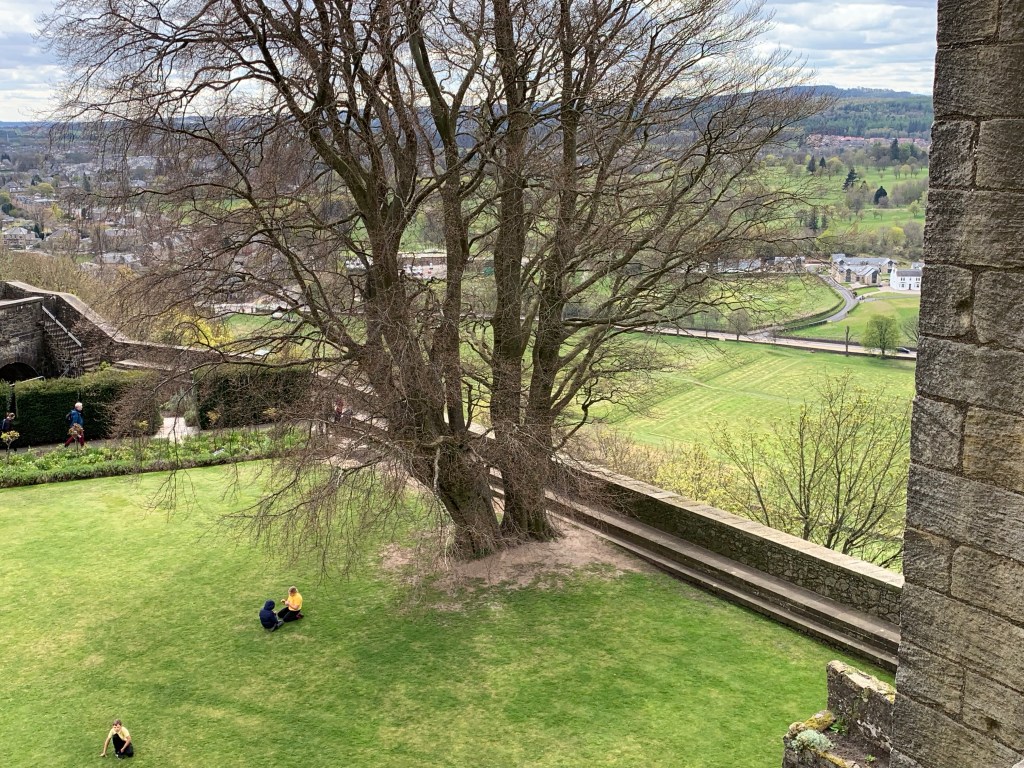
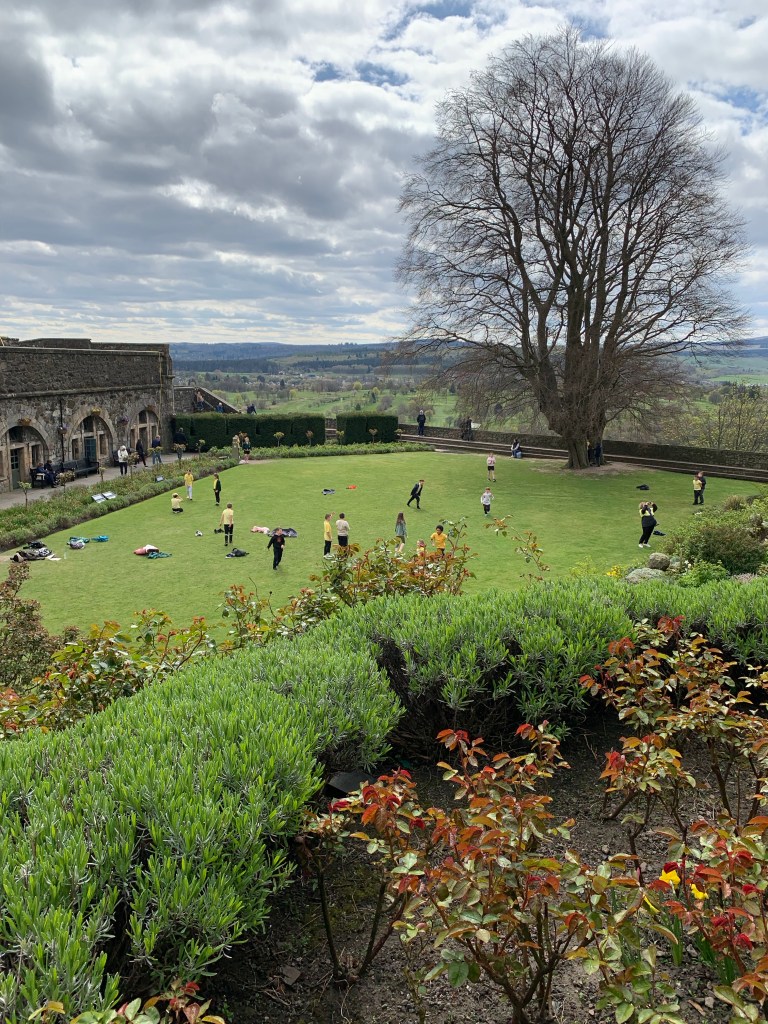
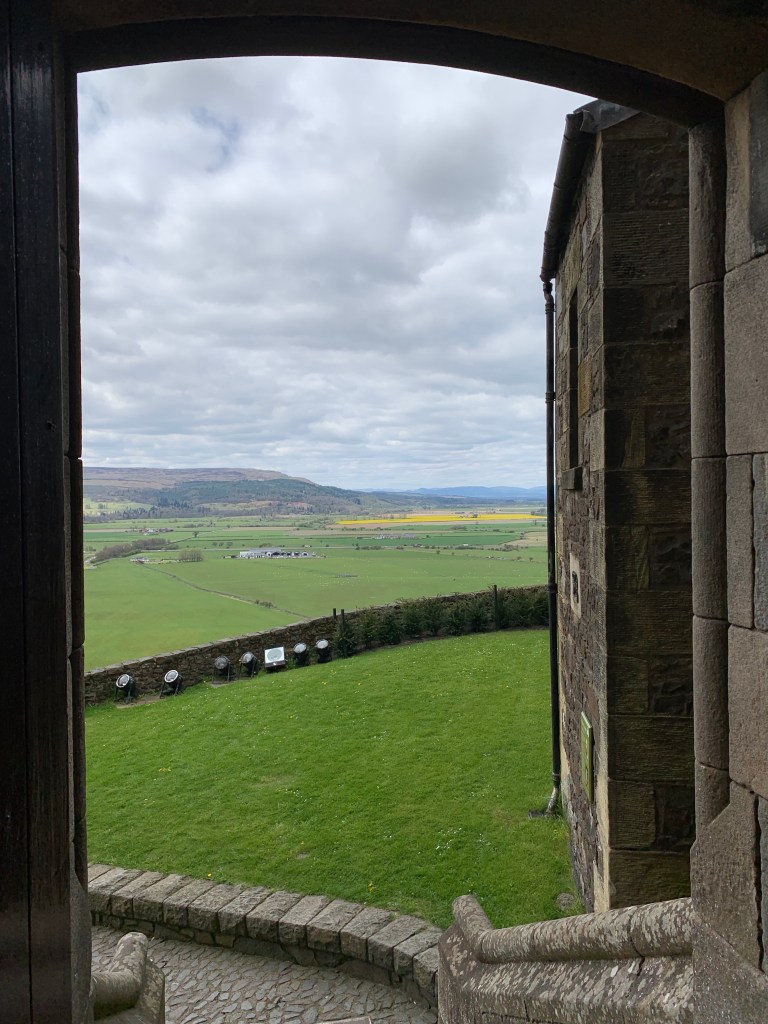
The countryside was rolling, and the highlands could be seen not that far away. Again, there were lots of huge fields dotted with sheep. The hillside up to the castle was steep, as befitted the road to a defensive fortification. Like Edinburgh Castle, Stirling was built on the top of an extinct volcano, and the views are spectactular!
The picture below shows the palace that James V built for his Queen, Mary de Guise. The tan roof to the right was the original Great Hall, that was no longer deemed grand enough for a renaissance king.
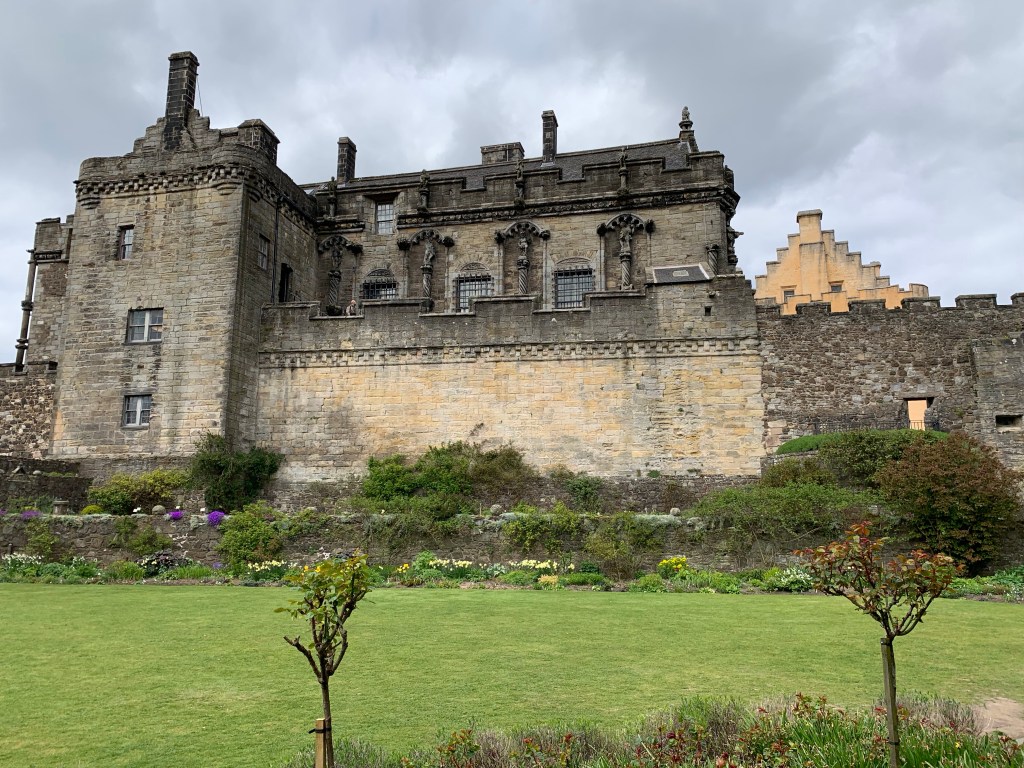
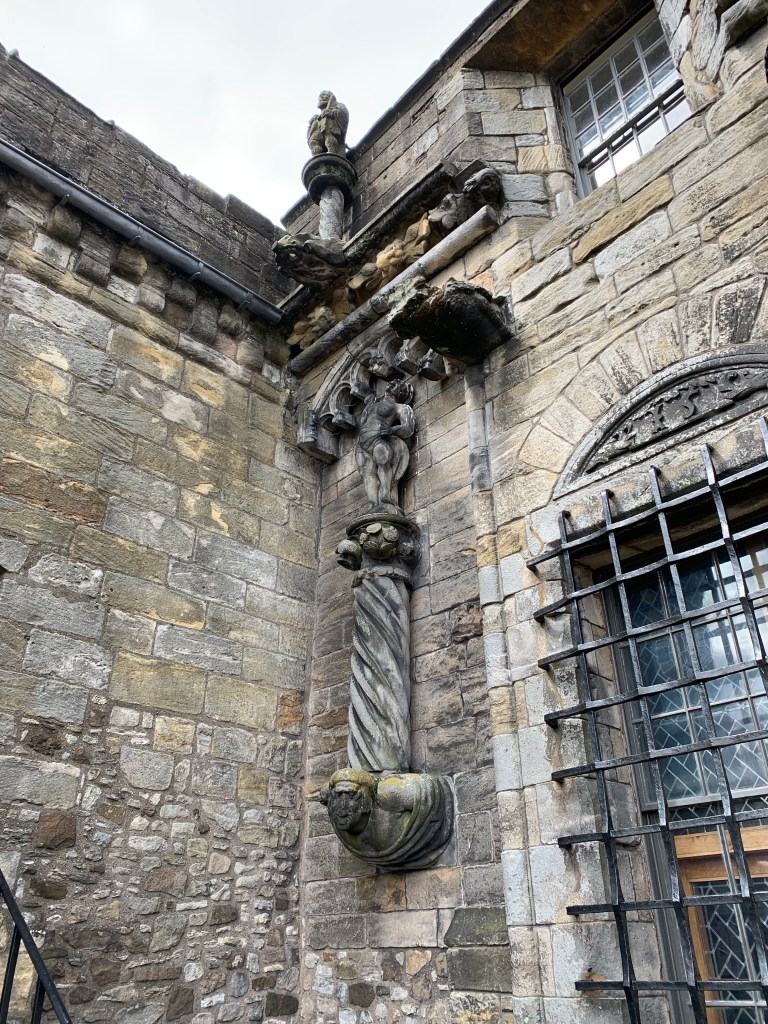
Stirling Castle was originally begun in the early 1100s as a defensive outpost. However, as the years went on, it was also a home for the monarchs. But it was James V who really made a mark on the fortress with the building of his royal palace at Stirling. The guide told us that the stone was now gray and weathered, but at one time, the building was a painted cream, and all of the statues and details would have been painted, and in color. There are simulations of what it must have looked like, and it was incredible! However, even with the new palace, defense was a key concern, and as you can see, it would be hard to approach unnoticed.

The Palace interior was truly spectacular. It has been restored to a close approximation of what it would have originally looked like. Characters in costume were in place to describe their jobs, and their functions. It must have been stunning when built.
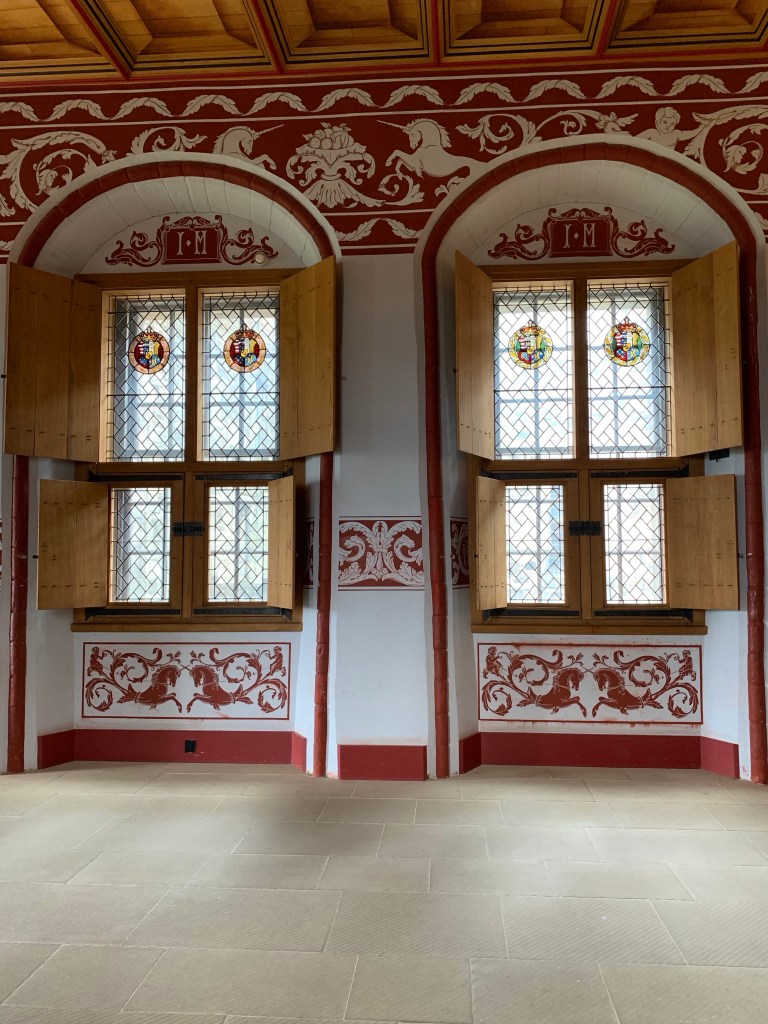
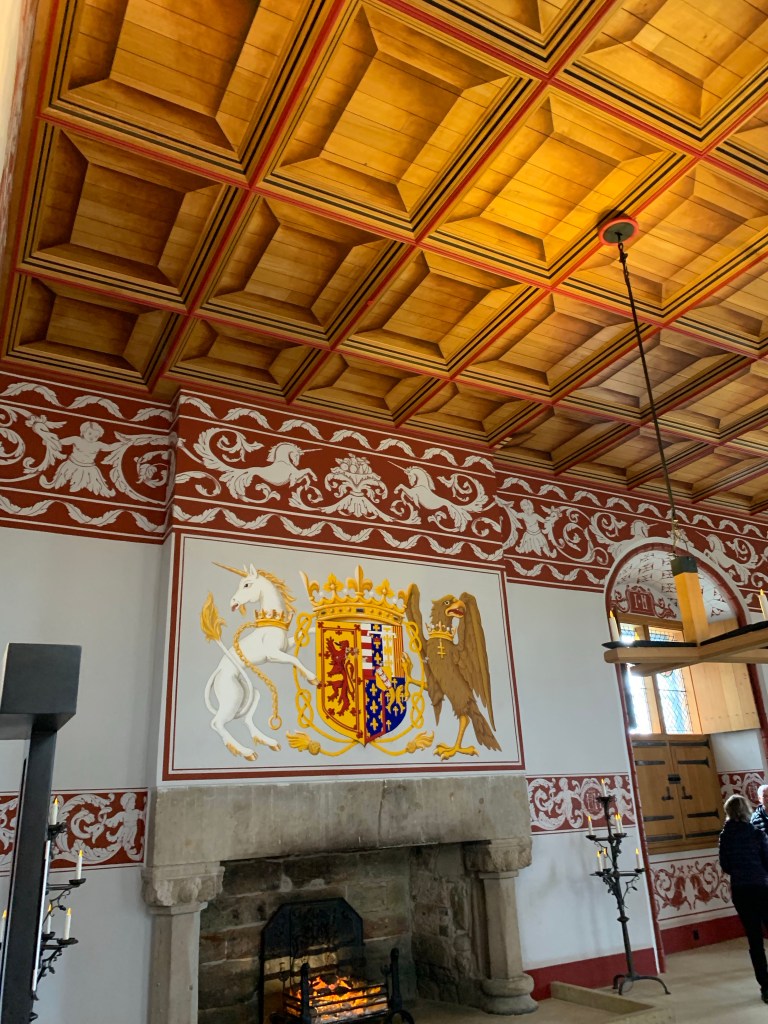
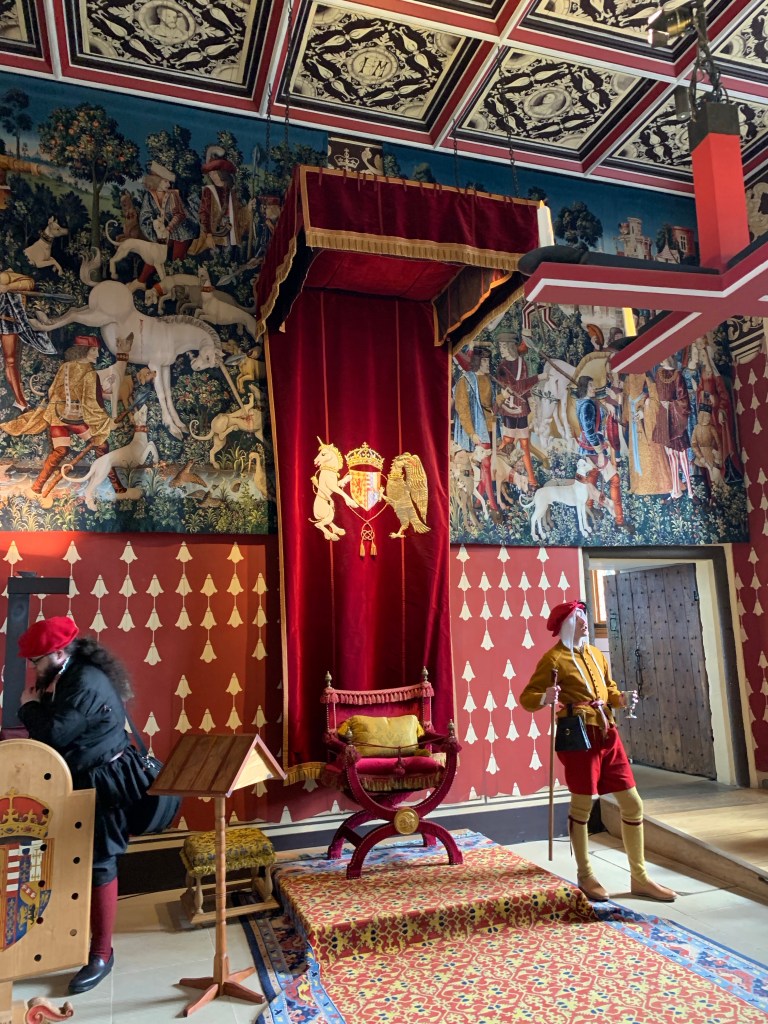
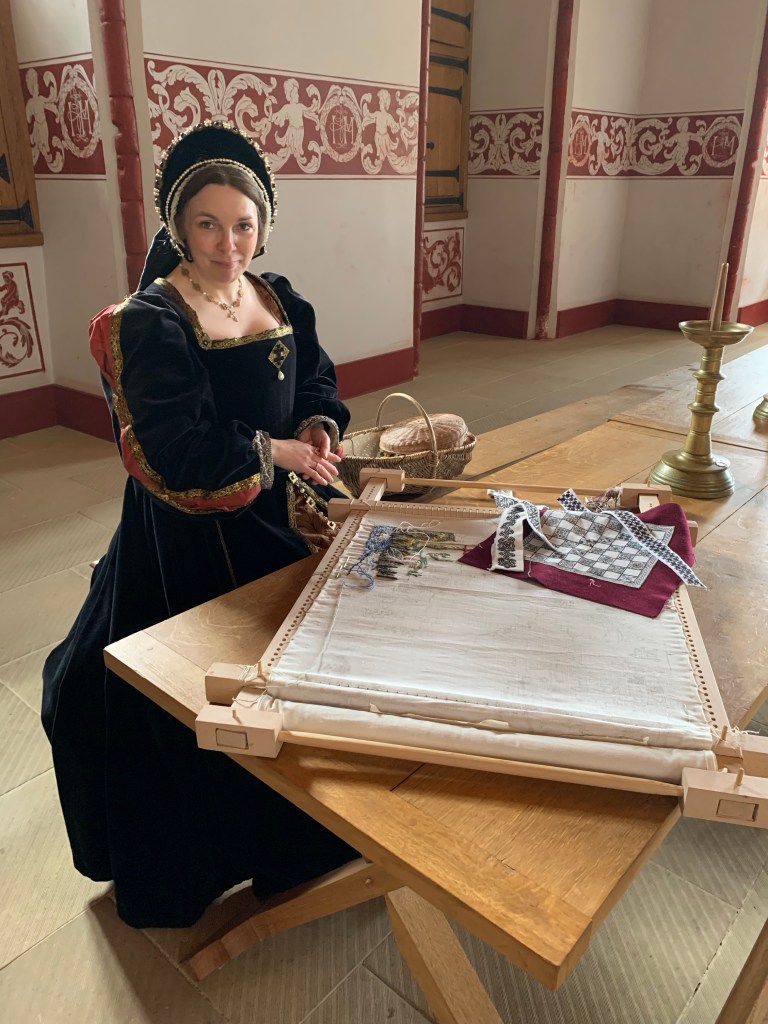
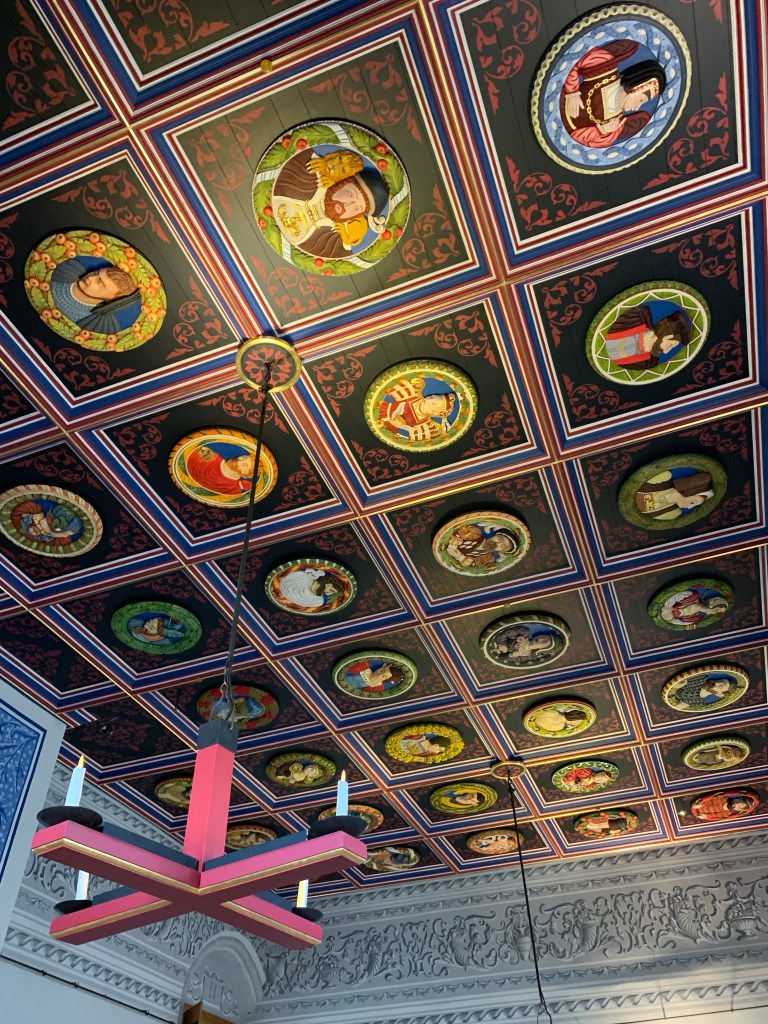
I did speak to two of the ladies about the embroidry being worked and that on display and learned a lot. I’ll to to talk about that in a seperate post. One thing I’ve learned about travelling in Europe, is to always look up. The ceilings, more often than not, are magnificant!
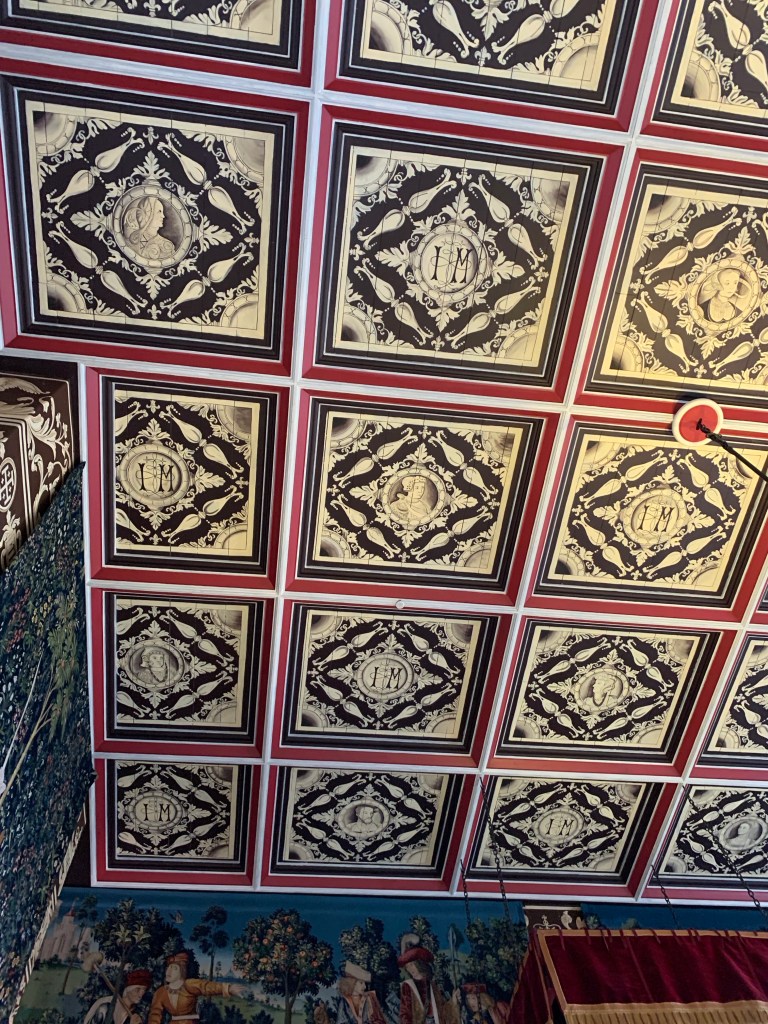
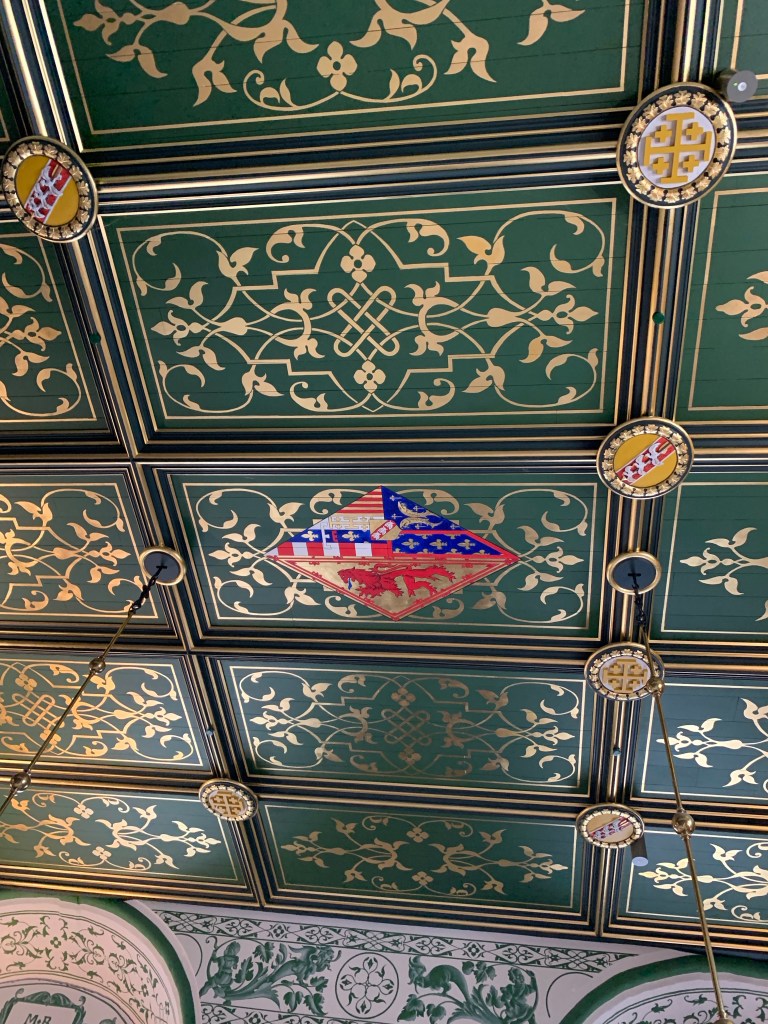
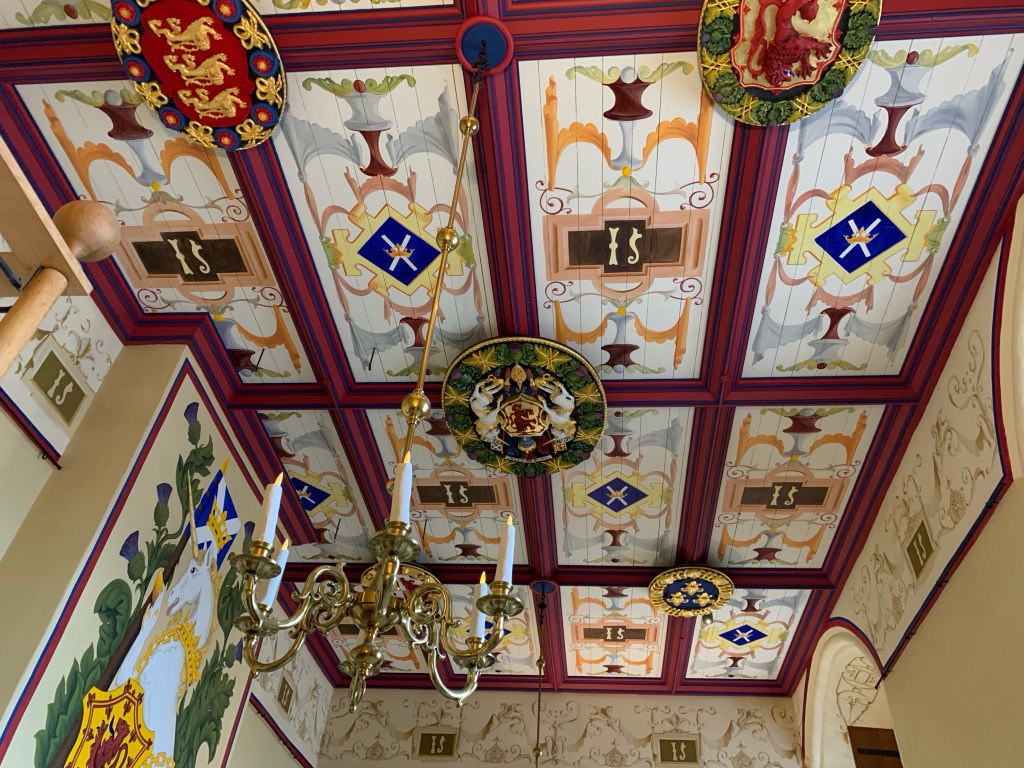
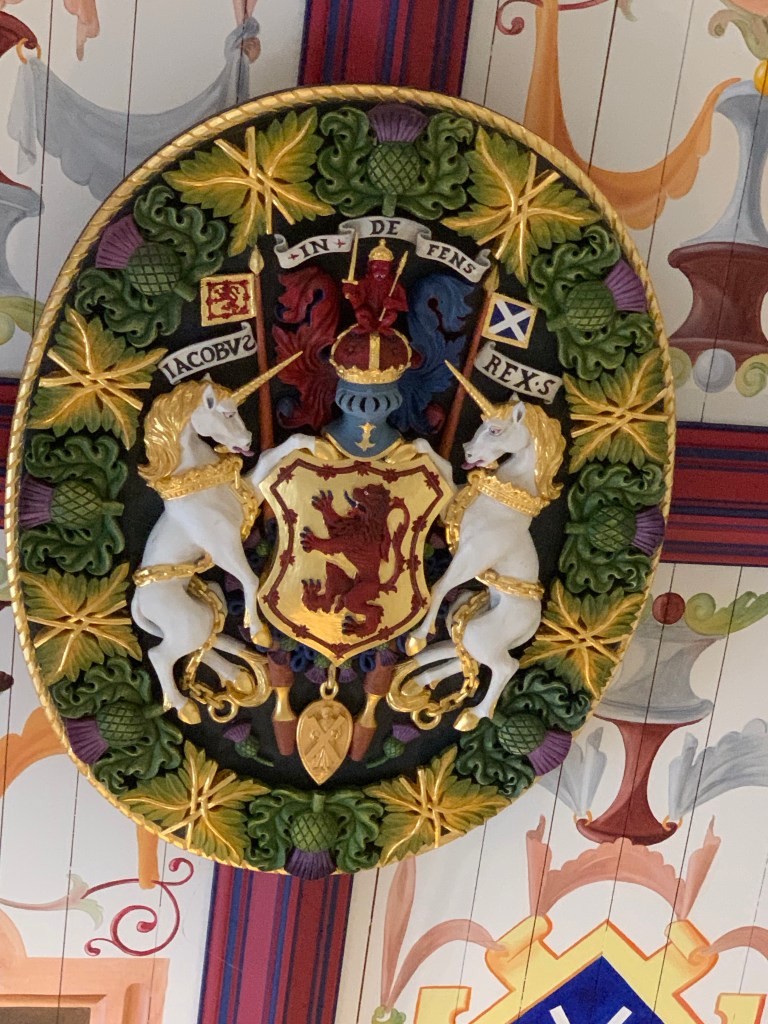
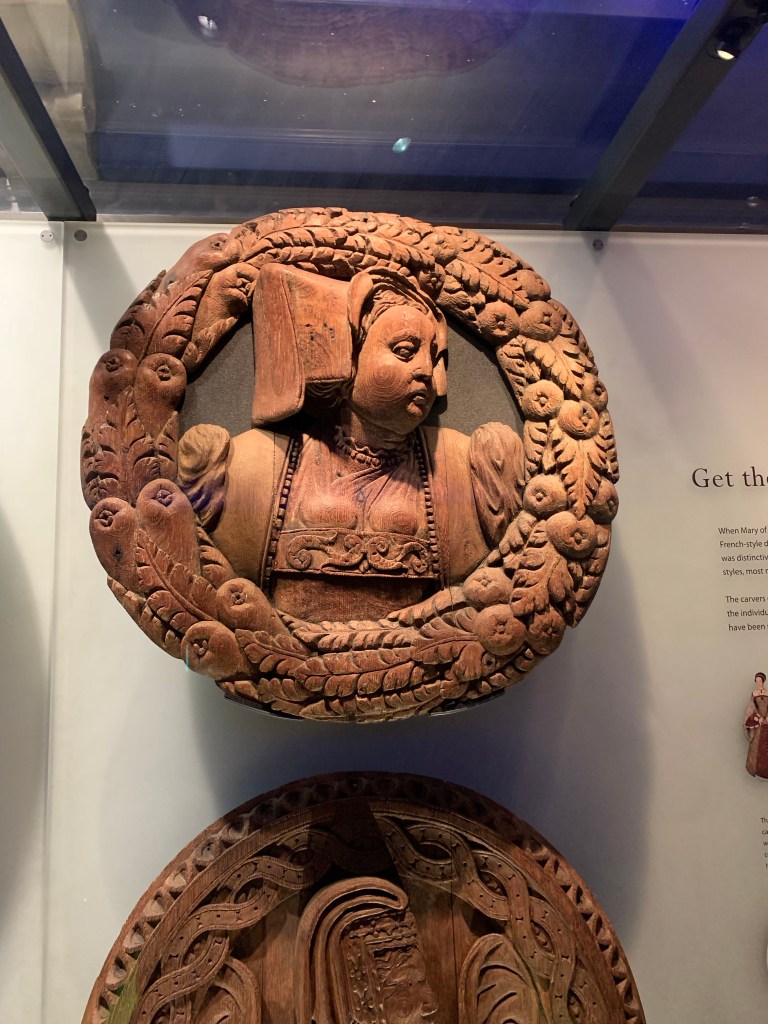
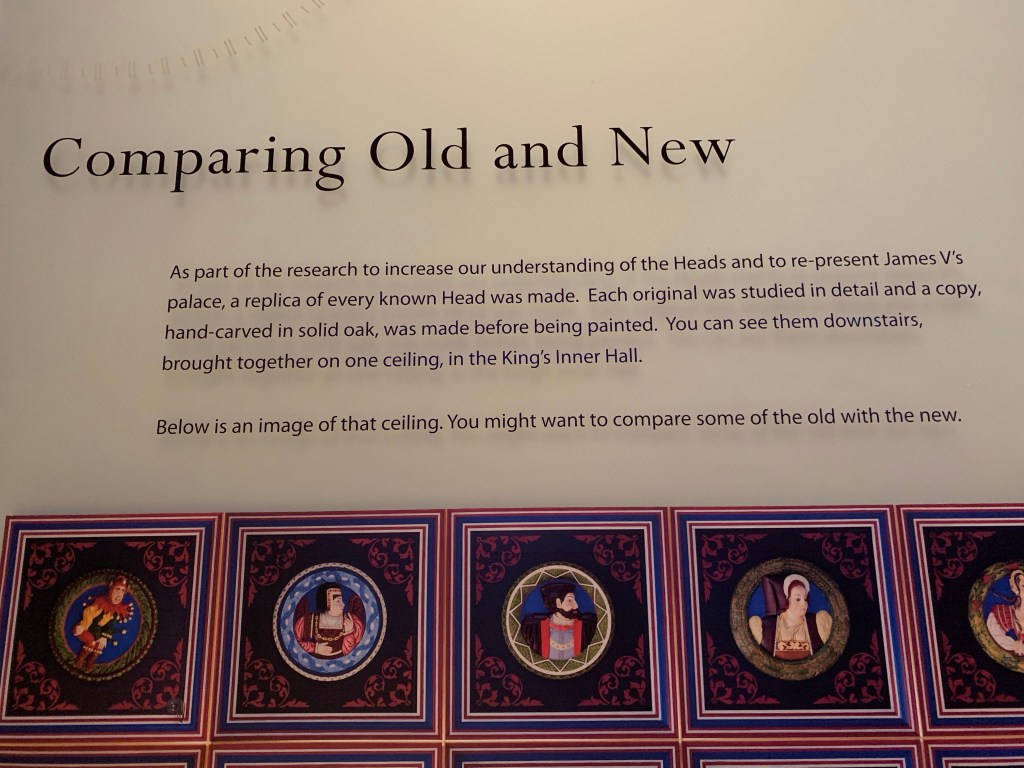
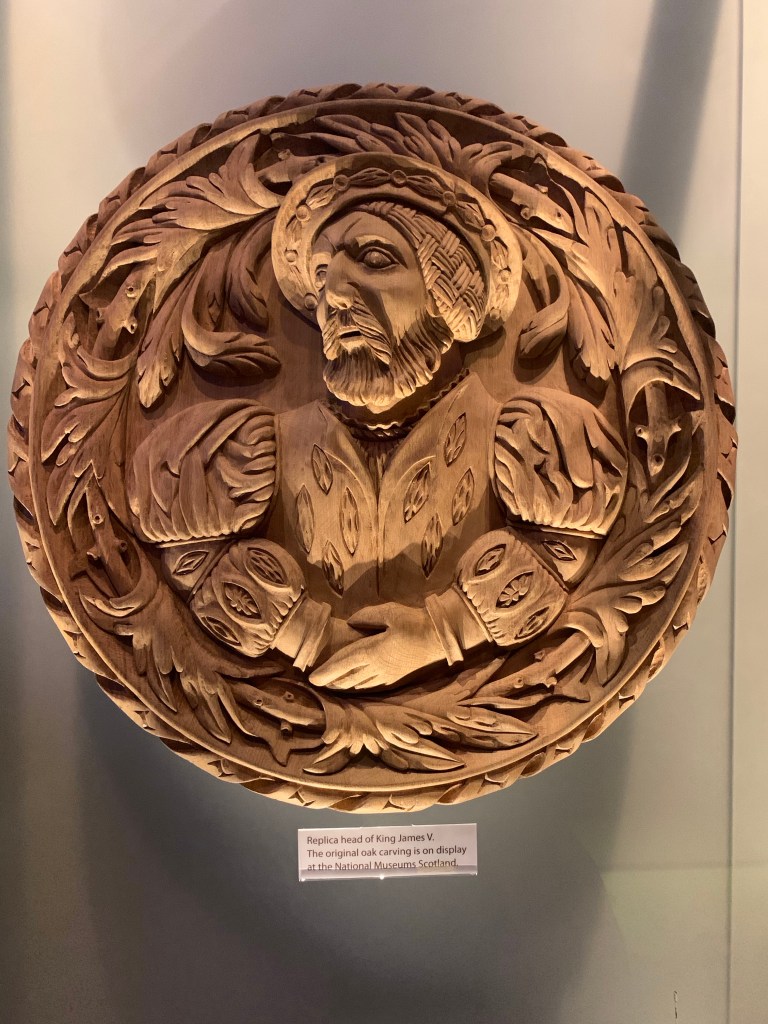
In one of the rooms, the King’s inner hall, the ceiling is covered with carved, painted heads. These are replicas of those that James V had made in the mid 1500s. Roughly a meter across, each was carved out of oak. The ceiling was dismantled in 1777, and the heads were dispersed or destroyed. However, they have been retrieved and are now on display. The are large, and elaborate, even in none of the paint remains. The exhibit is fascinating, and then to see the replica as to how they would have looked was incredible.
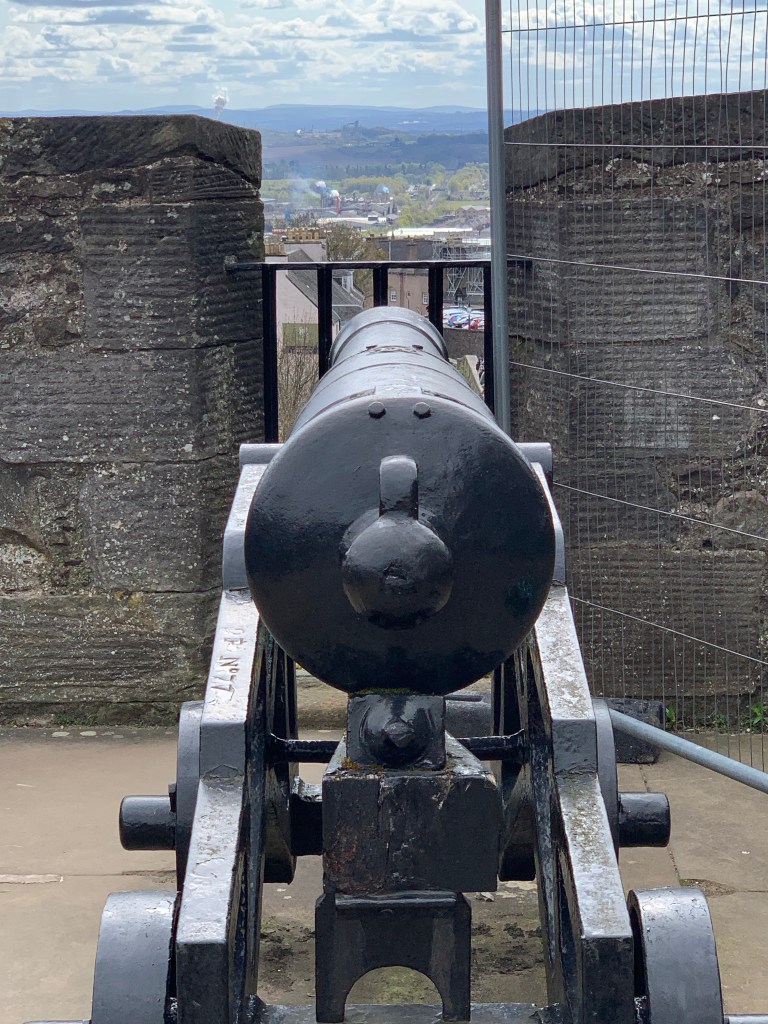
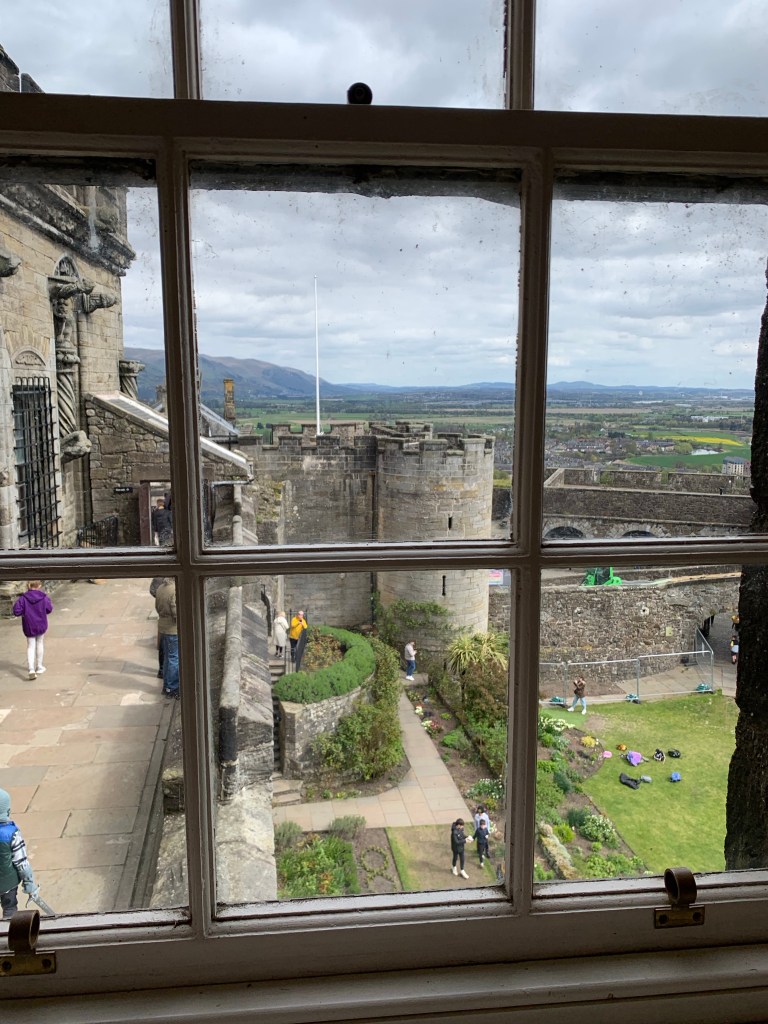
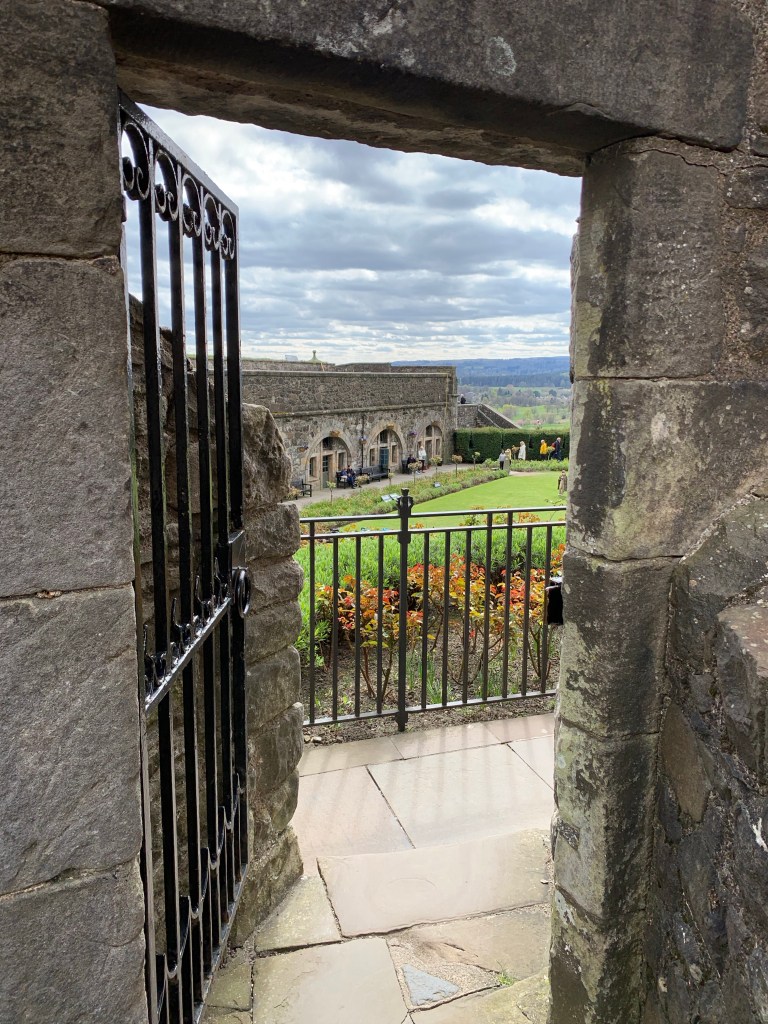
The buildings, the grounds, the gardens and the views were nothing short of spectacular. I’ve posted several more pictures at the end of the page.
After lunch, we headed off towards Linlithgow. One our way, we passed right by the Kelpie statues. I had really wanted to see these. At least I could see them on the fly!

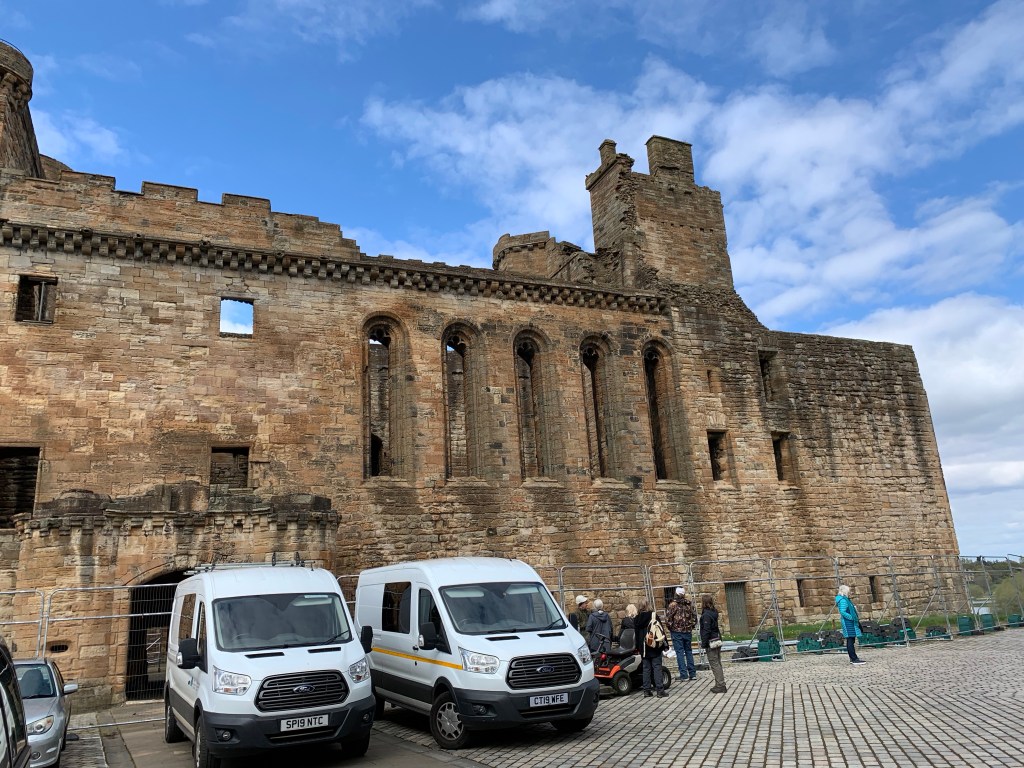
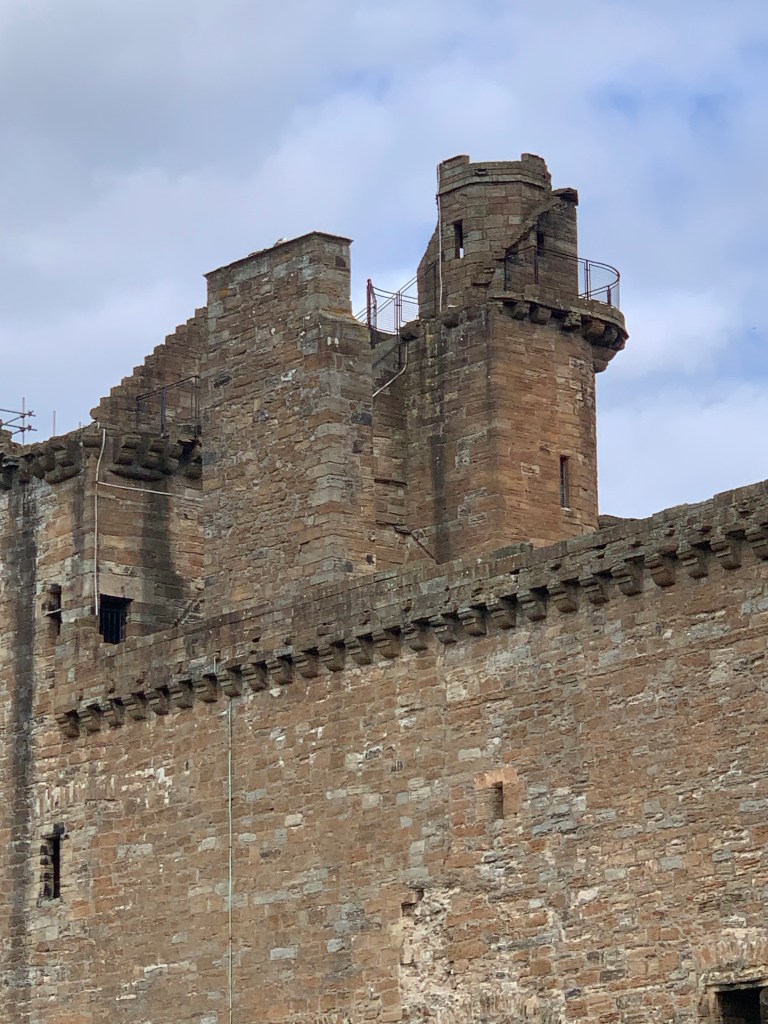
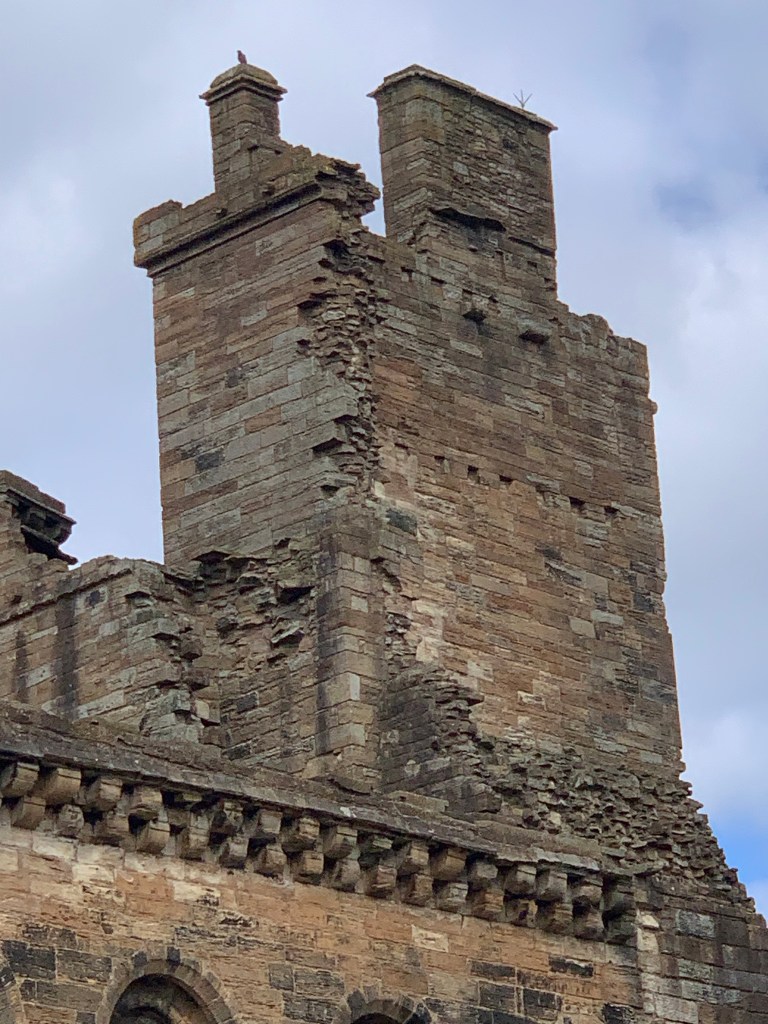
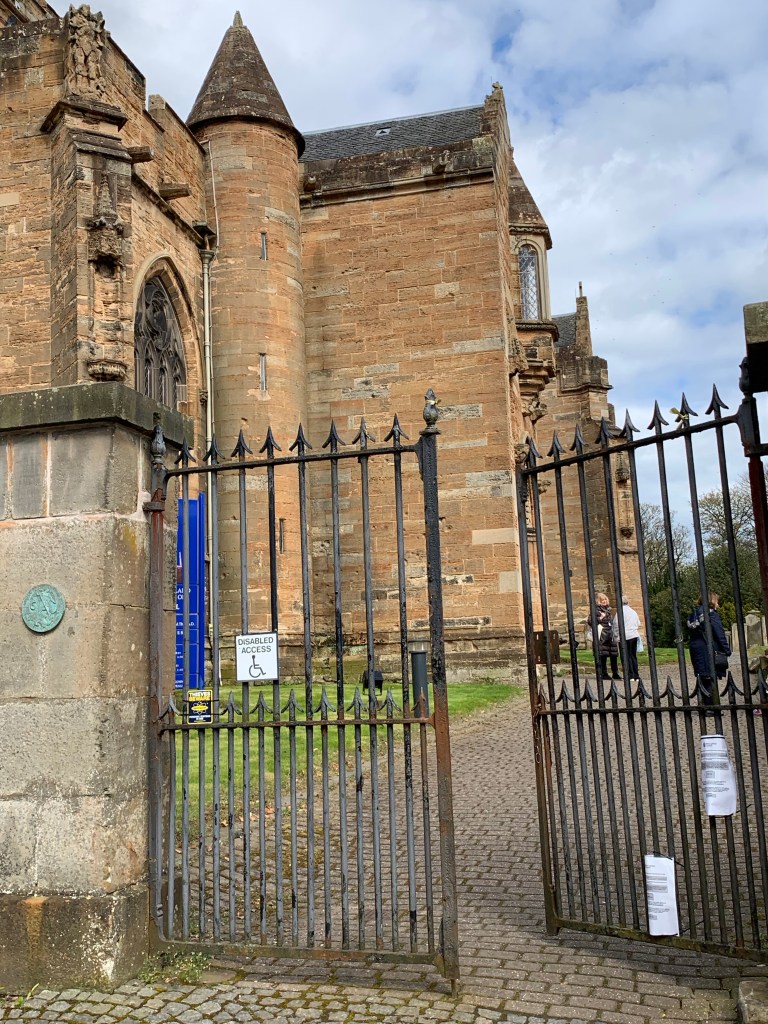
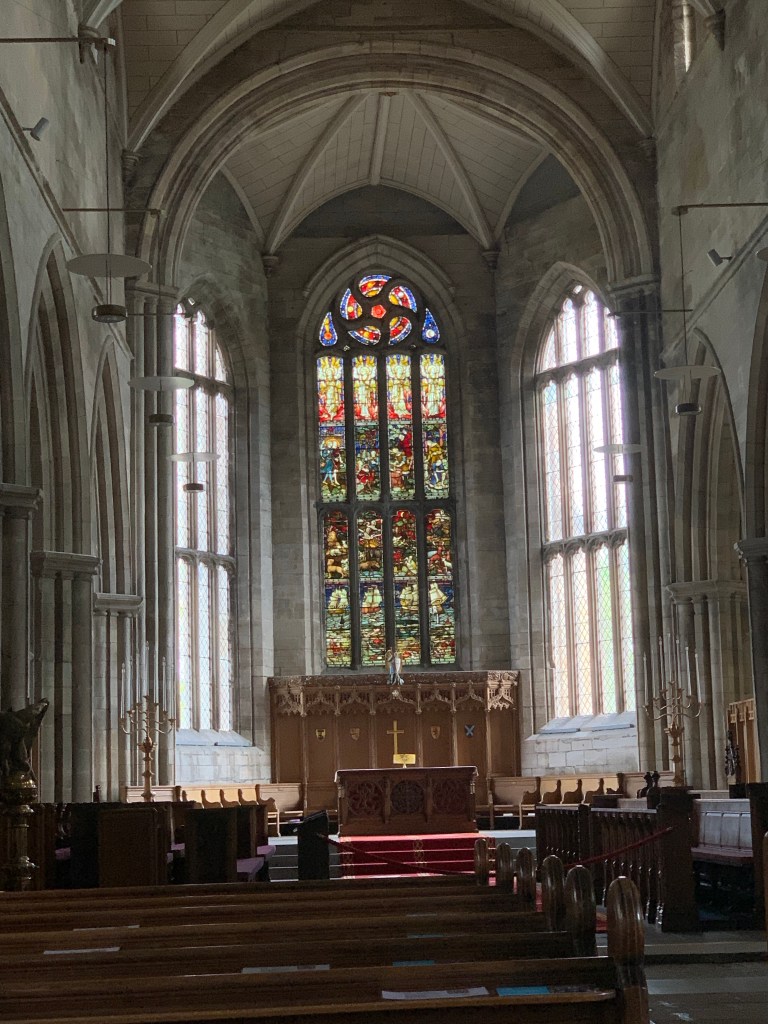
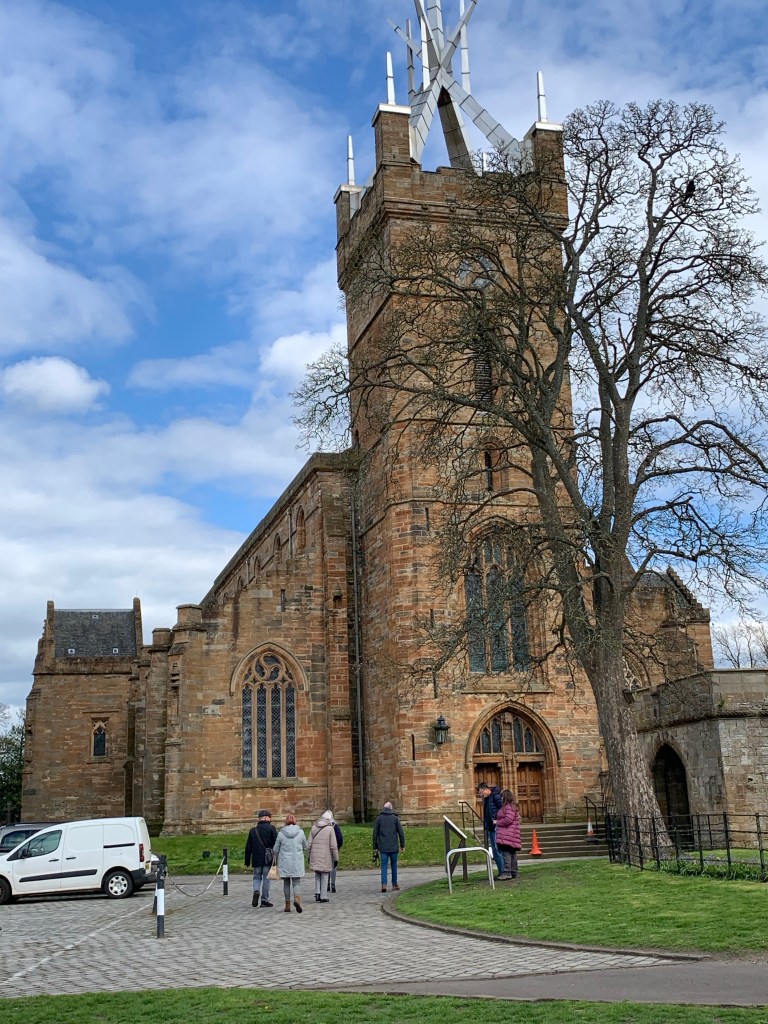
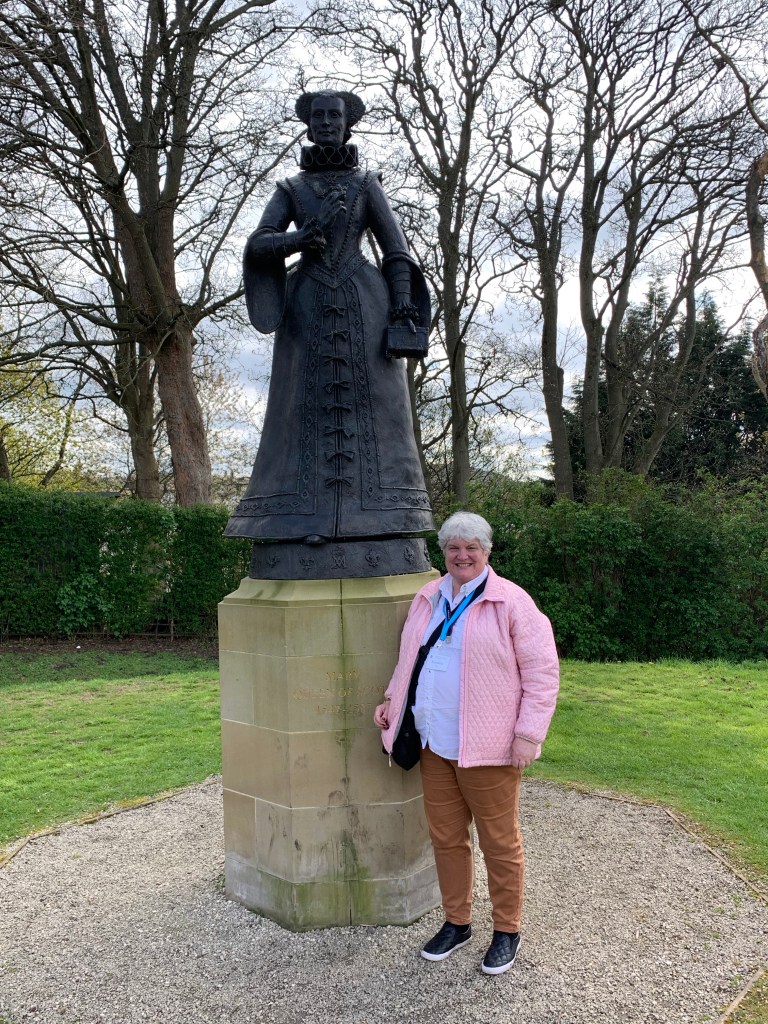
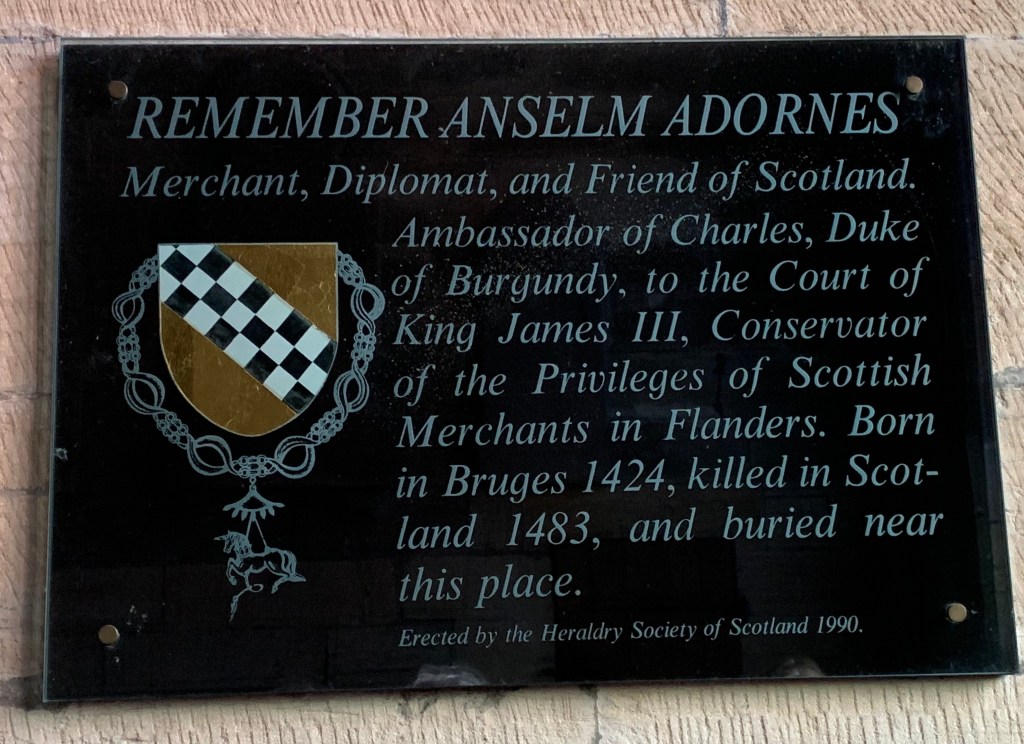
Our next stop was Linlithgow Palace. Linlithgow, now a ruin, was built in 1424, to replace an older structure. Mary, Queen of Scots, was born here. The roof has fallen in, and it isn’t safe to go in, but it is still impressive to look at. The church of St. Michaels, next to the palace ruins is still in good shape and still in use as a active community church. For Niccolo fans, there is a plaque to commerate Anselm Adorne’s life and death placed in the church. As prominent of a character in the stories, he was an actual person, important in Scottish history.
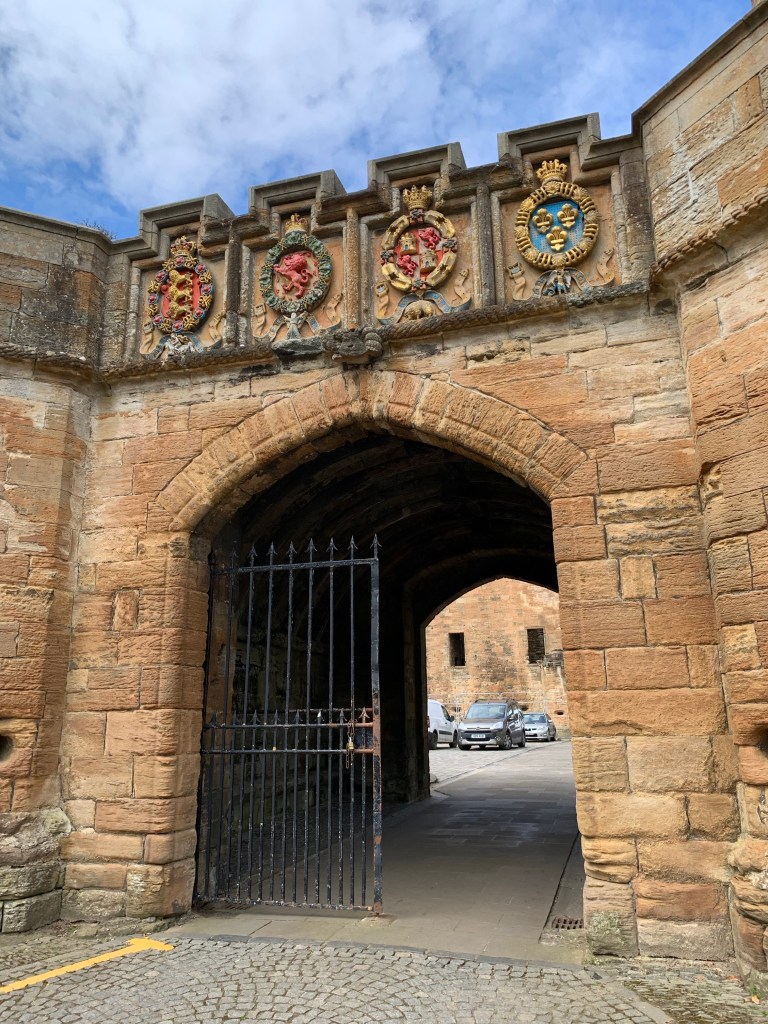
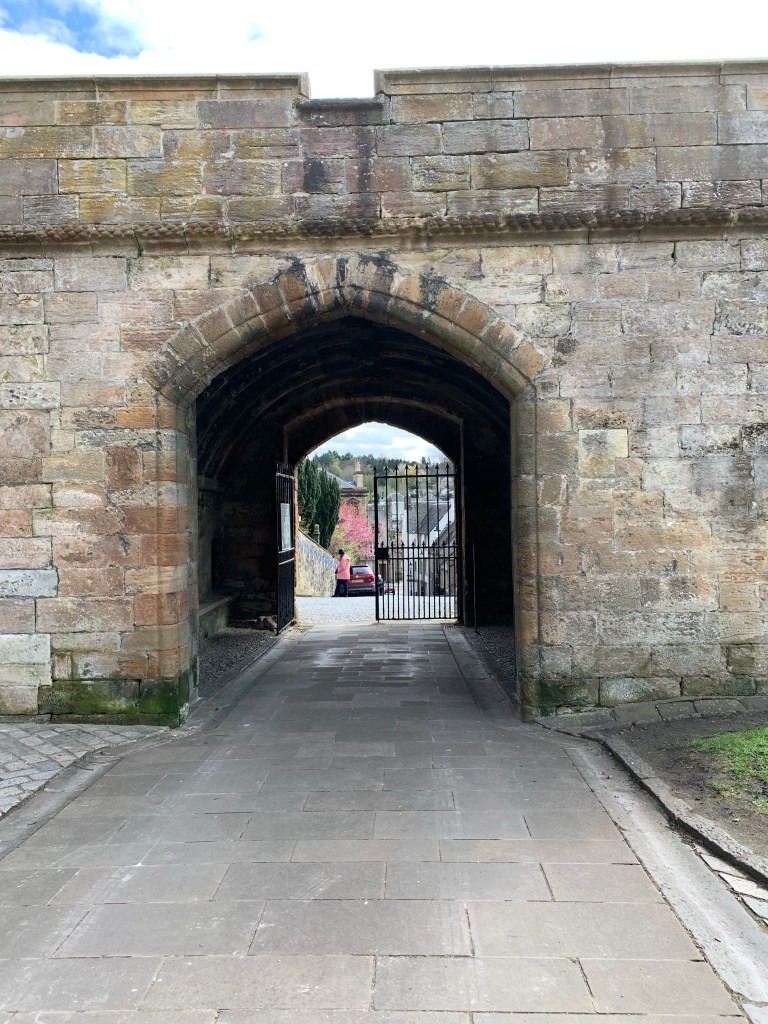
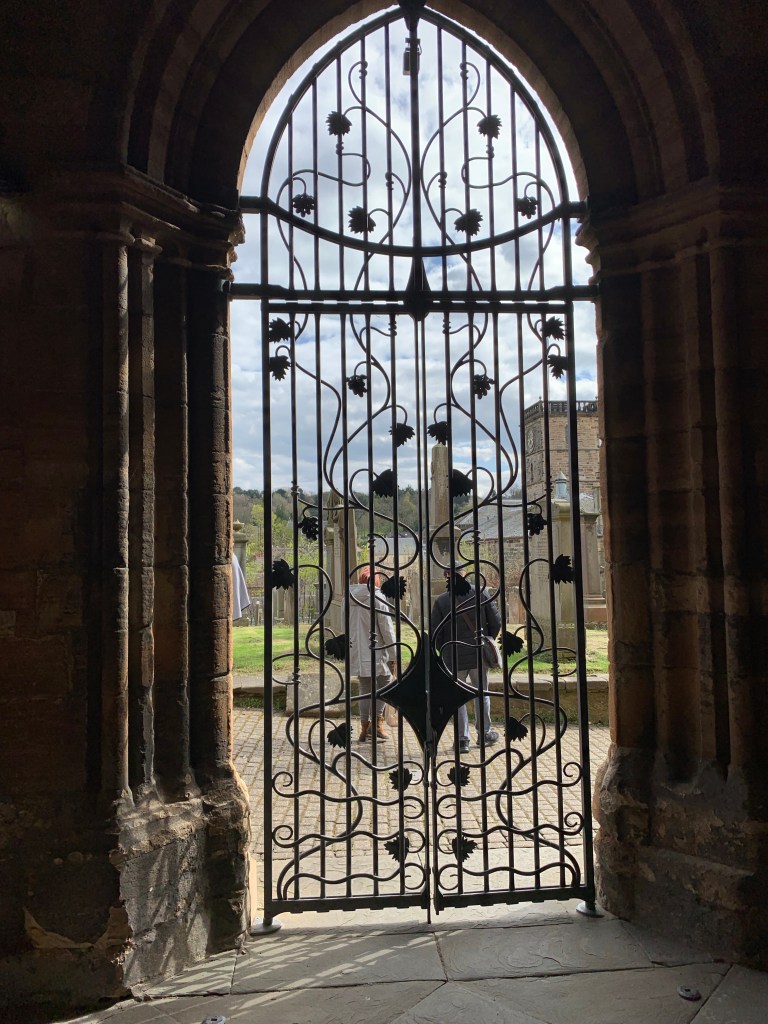
The entrance to Linlithgow and St Michaels in unimpressive. A small, narrow lane off of a square. You would have no idea it is up there behind the main town. But once through the gatehouse, a large, flat lawn opens up, with the palace on top, and then drops down to a lovely loch. It’s a very peaceful place, and must have been lovely in it’s day. I have pictures of Linlithgow and St. Michaels below, followed by more of Stirling. It was a lovely day, and the weather cooperated nicely.

 Suzanne’s Travels
Those pictures of the palace interior were gorgeous.
LikeLike