
Edinburgh Castle
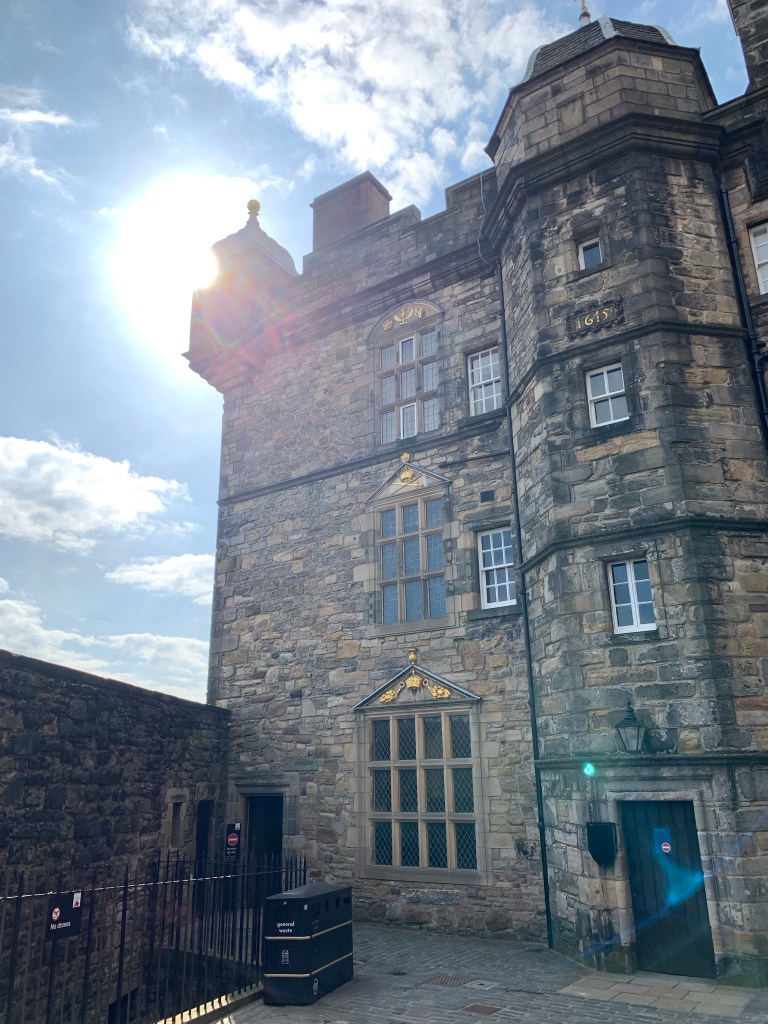
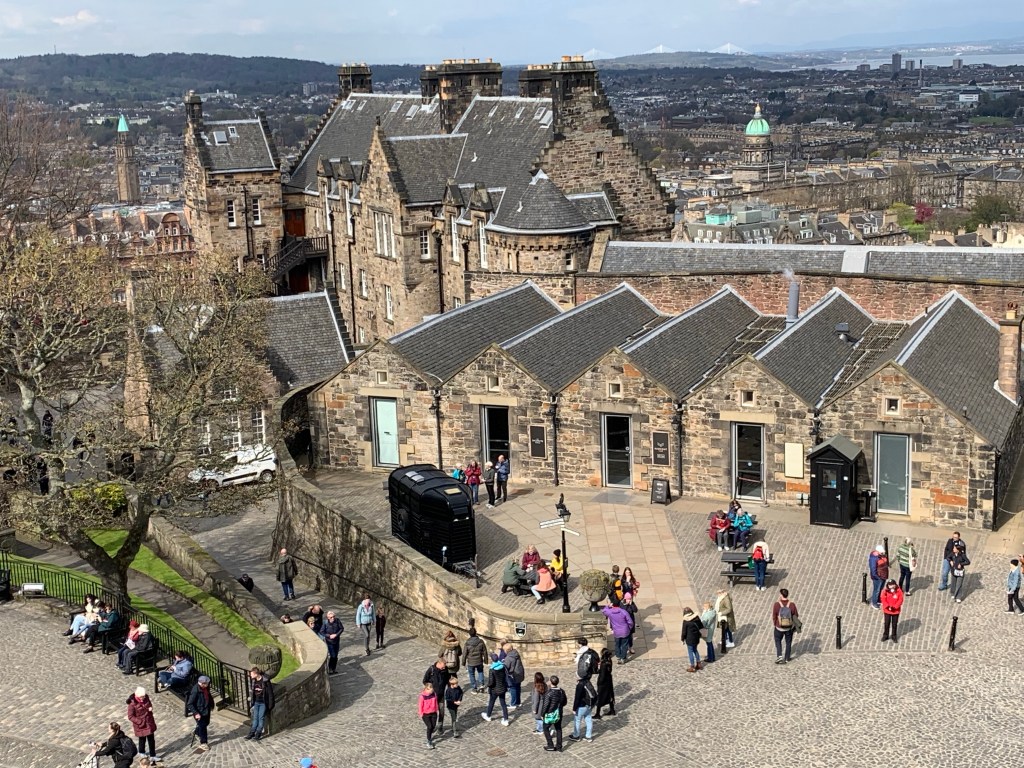
The castle dominates Edinburgh. From New Town, it seems everywhere you look the castle is looming overhead, looking balefully down. Parts of it have stood for over 1000 years, and bronze age artifacts have been found at the site. That’s not surprising when you consider how easily defended the site can be.
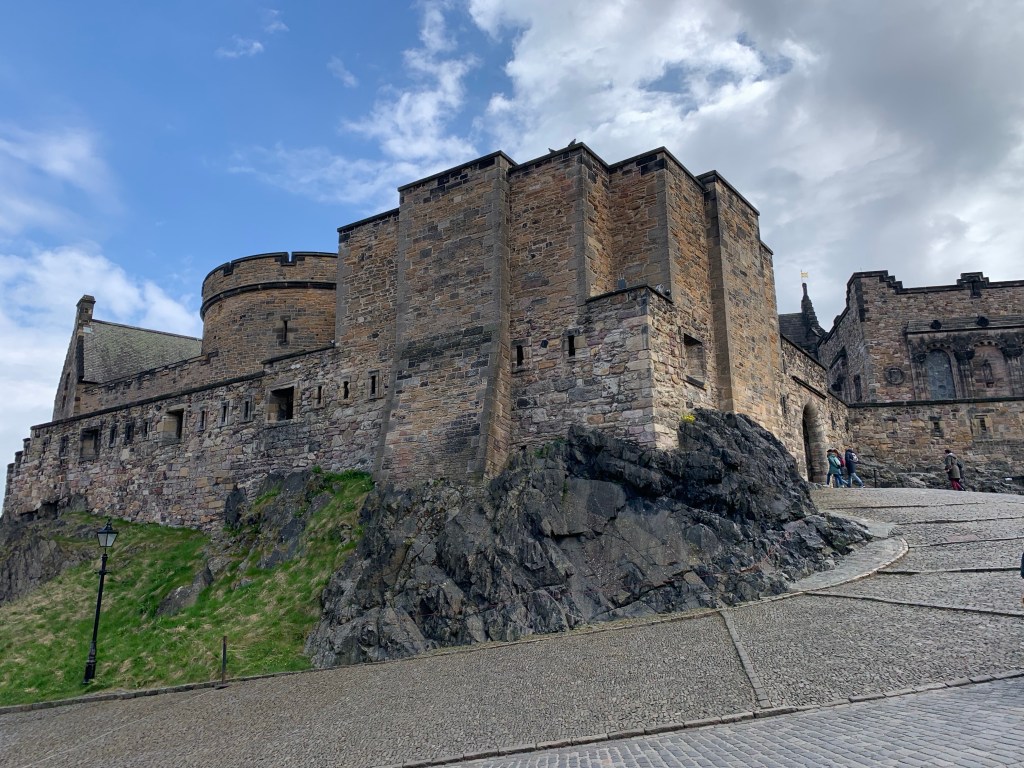
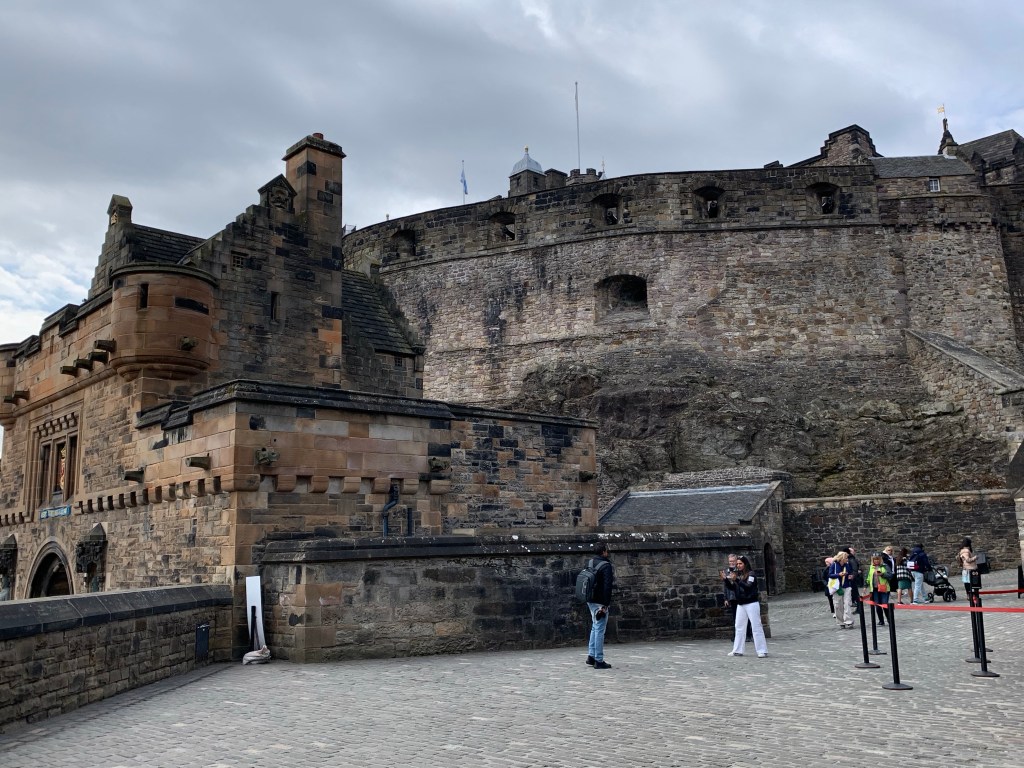
The main site of the Old City is an extinct volcano, and the castle sits on the basalt plug high over everything. It’s really amazing to see how the dressed stone comes right up from the raw cliff stone.
Edinburgh is the oddest city in how the land rises and falls. From New Town, and the Princes Street Gardens, you look south, and the castle looms above you. The hillsides of Old Town leading away from the castle drop down steeply. I rode a hop on-hop off bus today with a live tour guide, and she commented that on the Royal Mile, most of the buildings appeared about 5-6 stories. But if you looked from the backside, the hillside dropped down so much, that they were often 10 stories in the back. So the whole area is very steep.
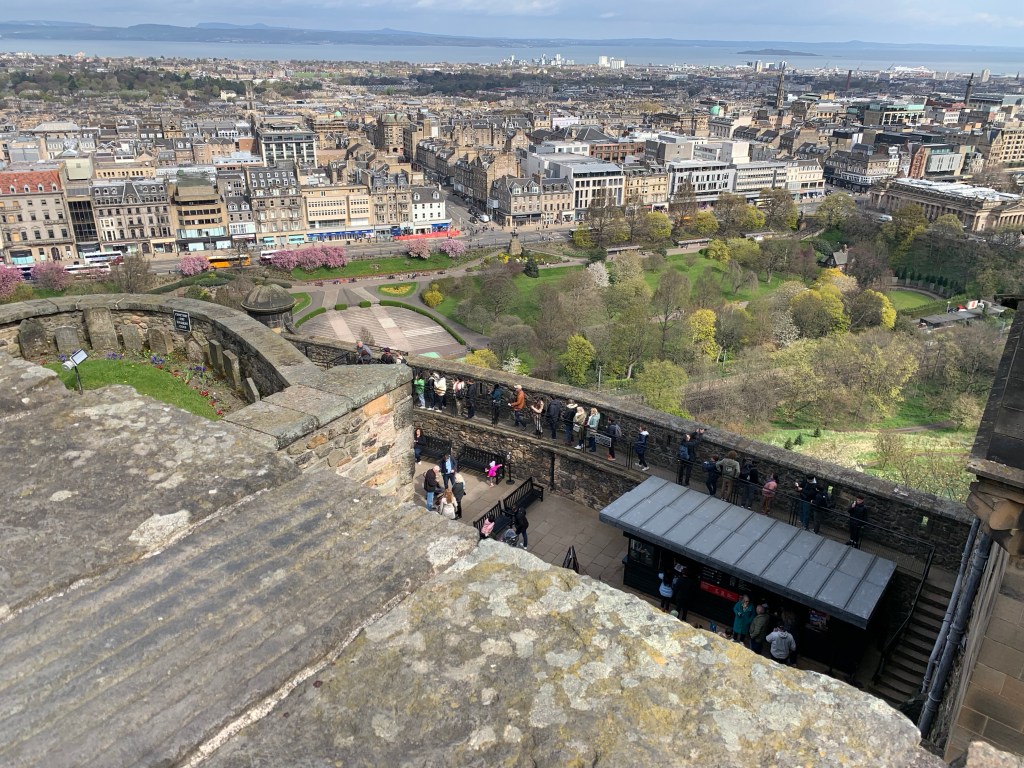
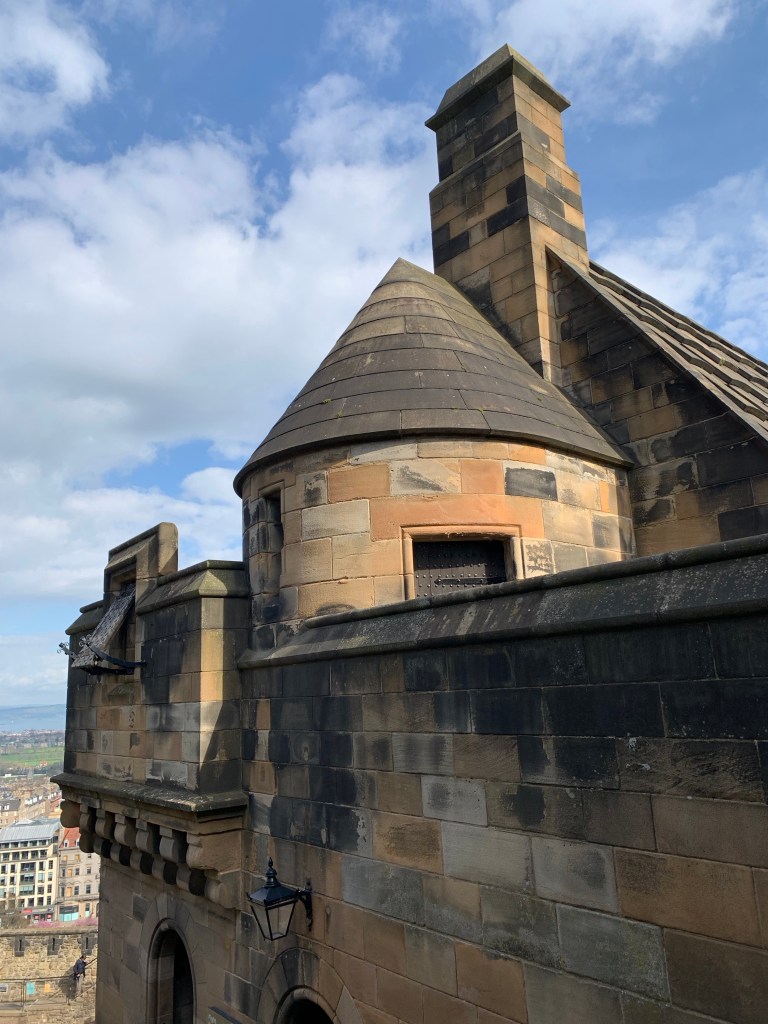
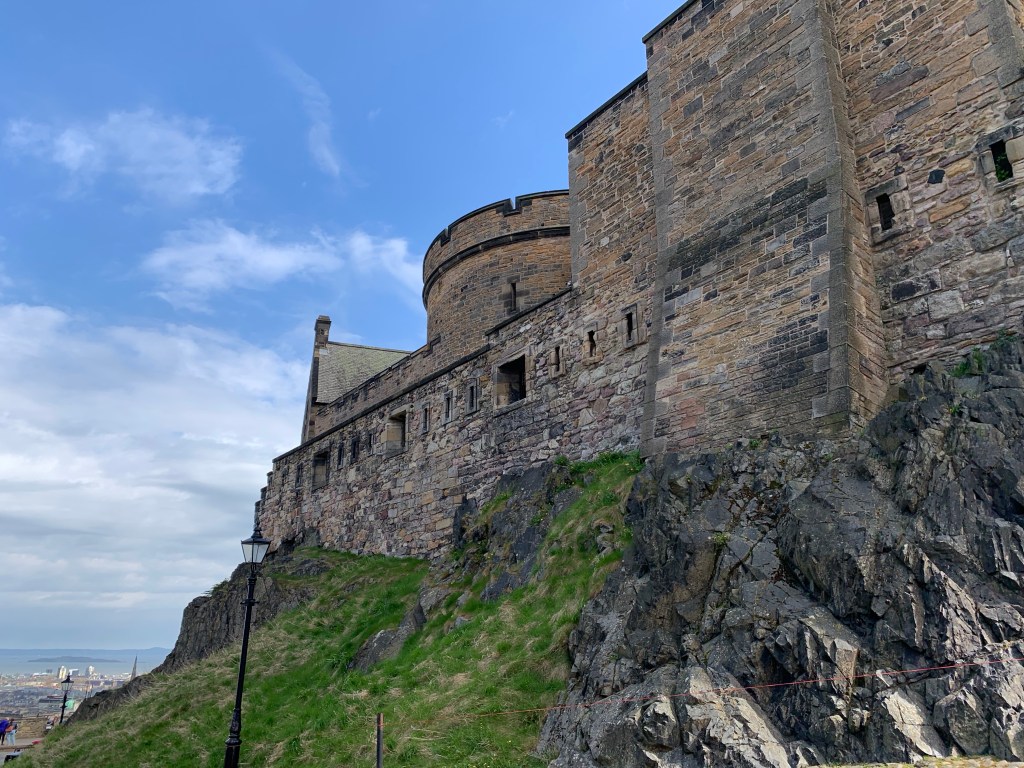
However, once you go west and around the castle, it’s still obvious, but as you get away, the land must rise gradually because you don’t see the cliff bluff anymore. And the ground slopes subtly up and down hill. You don’t notice unless your walking, or you are looking carefully at the horizon.
For example, I really wanted to see Calton Hill. From Princes Street you can see the Nelson Monument and the other monuments way off in the distance. But it looked so far away, I didn’t think I’d get there. But the Hop on-Hop off tour bus went right by there. Then the next stop was the Balmoral Hotel, right on Princes Street. One, I didn’t realize it was so close, and two, it didn’t feel like we changed elevation at all.

(Nelson Monument up on Calton Hill(
I’m not great with directions, I freely admit. Stop laughing, I know it’s pretty obvious. But the lay of the land in Edinburgh is very deceptive. Some places are very steep and others are not. But since the city is built on a volcano, I supposed that is to be expected. It’s just one more level to the layers of fascination this city holds.
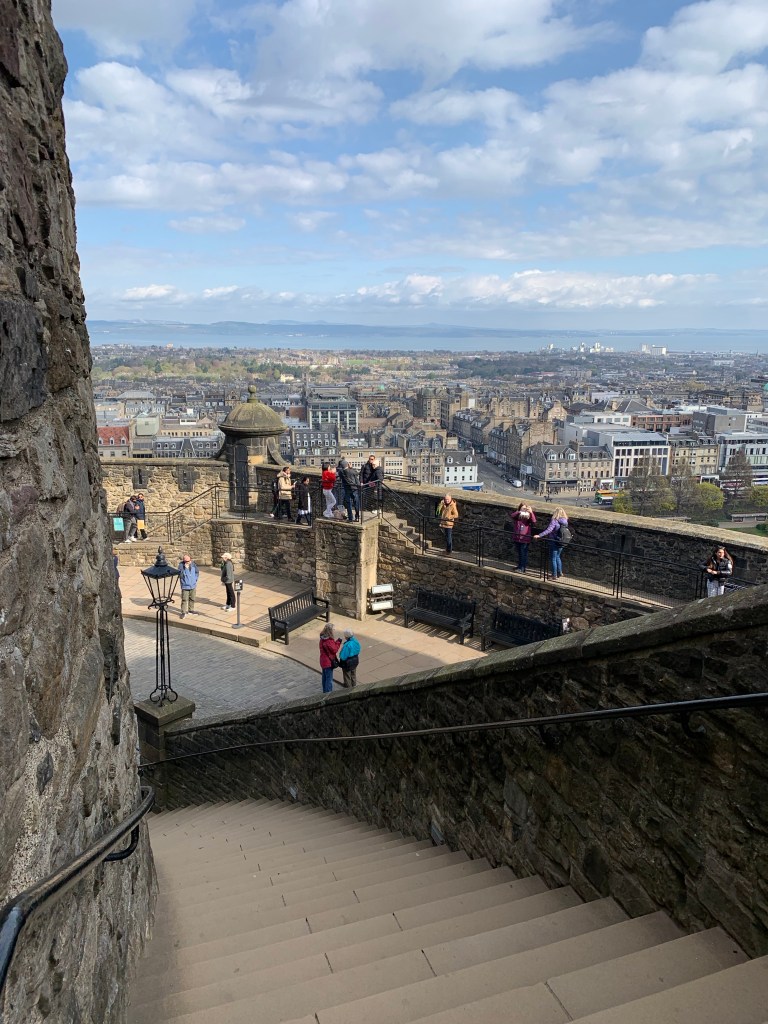
I was told by my friends in Scotland to get tickets to the castle. They weren’t kidding. We had a time slot for arrival between 9:30 and 10am. This worked well. We got in, picked up our audio guides and headed out. We decided to split up today, as we have different plans. I had been warned about how steep everything was, so I headed directly up the Lang Staircase to the top. It was a climb, no doubt, but it would be easier to come down the hill than climb it!

(Lang Staircase near the top)
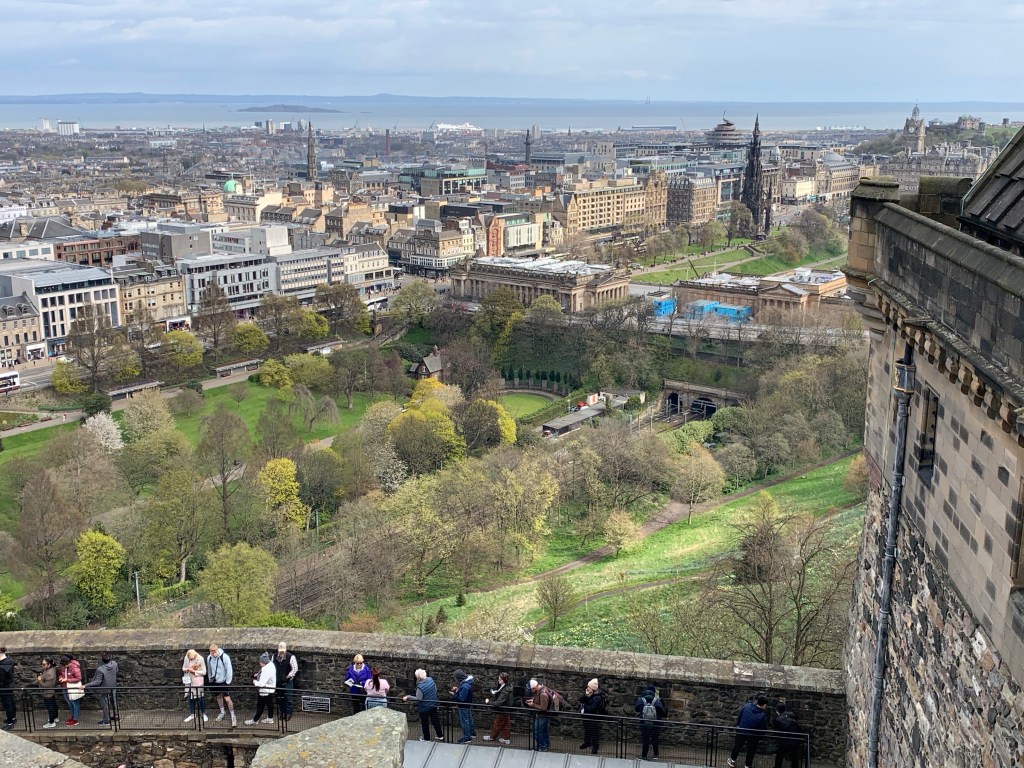
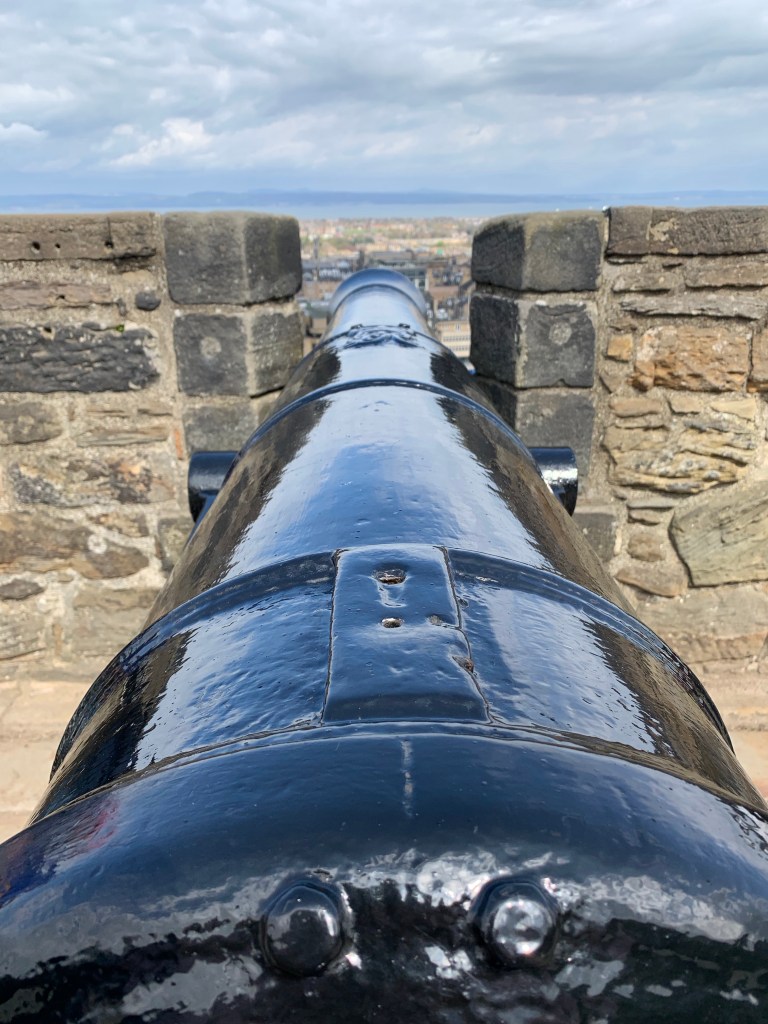
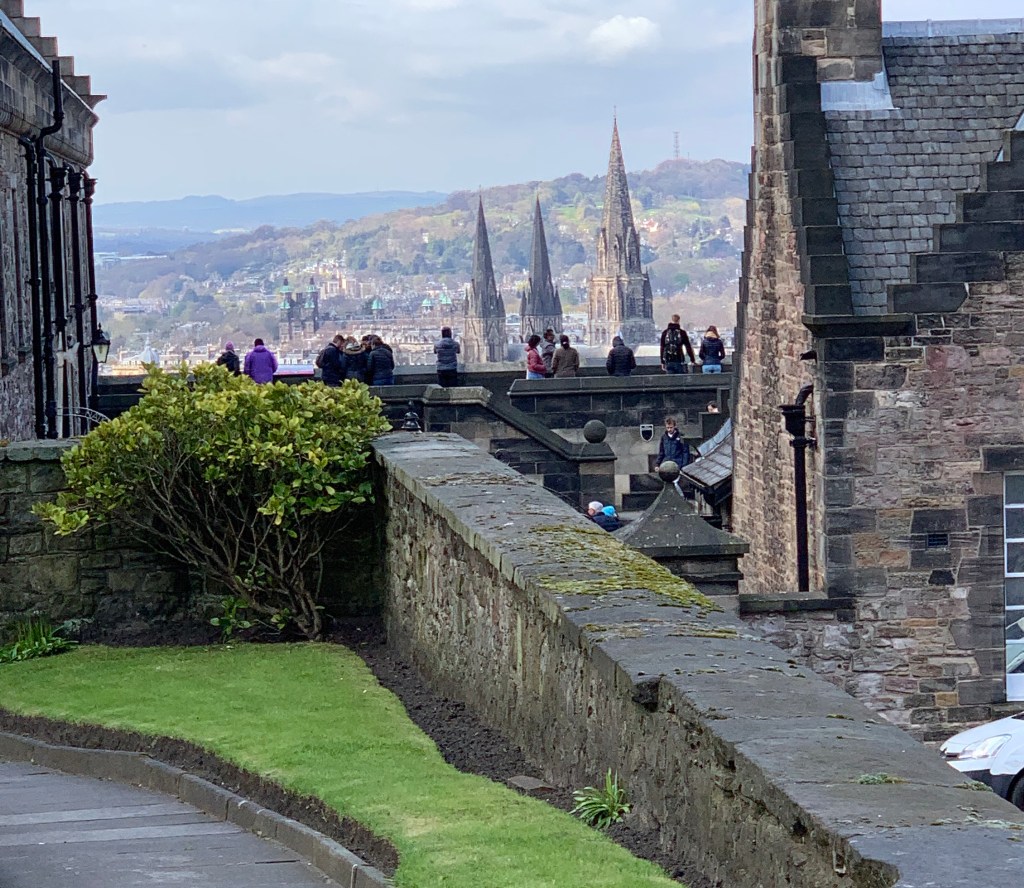
I took a break at the Half Moon Battery (just like it sounds – cannon located around a half circle wall. The coverage of the city was amazing!) and looked at the map. Like Stirling, Edinburgh Castle reminded me strongly of Mont Saint Michel in France. I spent the night there once, and really had a chance to explore. Like the castles, it was walled, and consisted of a steep main road that switched back on itself all the way to the top. The comment was made at both castles that the land itself is part of the protection. I can see that is indeed the case, and the steep, switch back, narrow roads gave the advantage to those who were the inhabitants.
From there, I began with the Honors of Scotland and the Stone of Destiny. These were impressive, as they should be. After that, I went into the Palace Apartments, then to the Great Hall. As like any royal residence, these were impressive. Richly decorated, fit for a king (or queen).
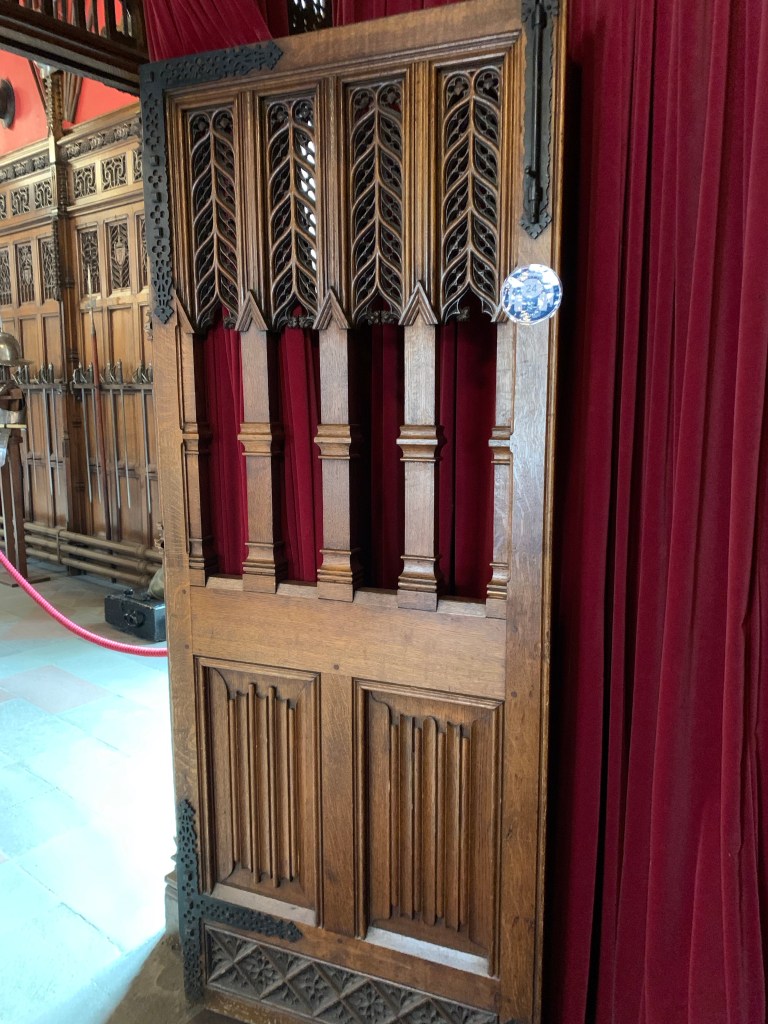
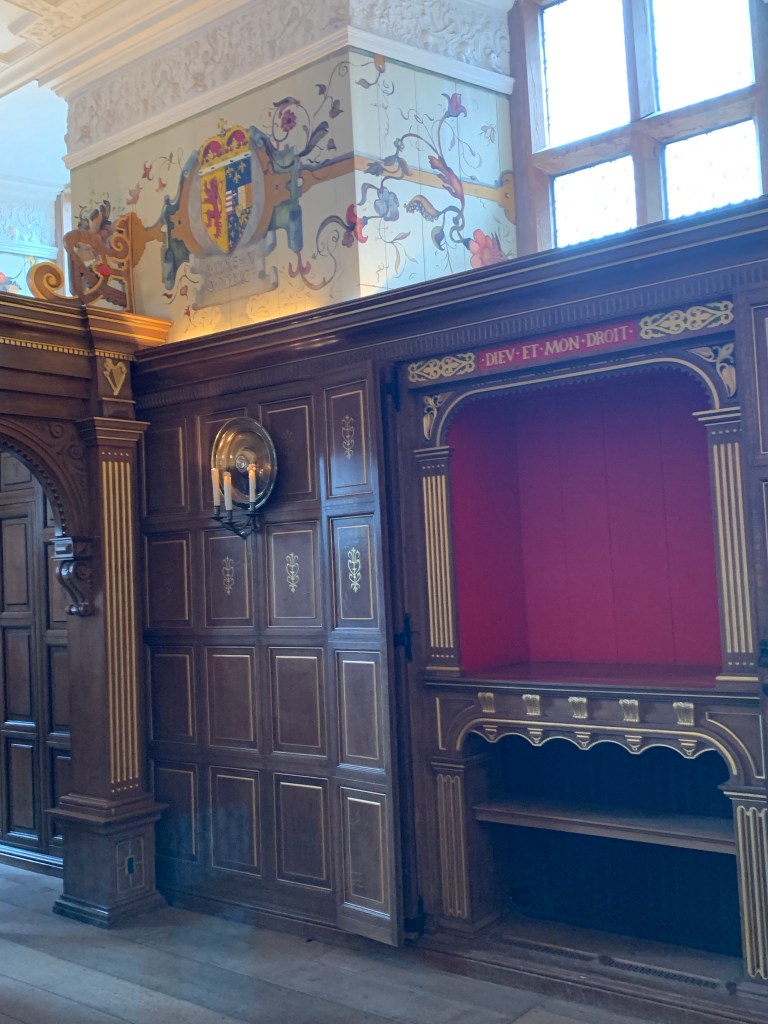

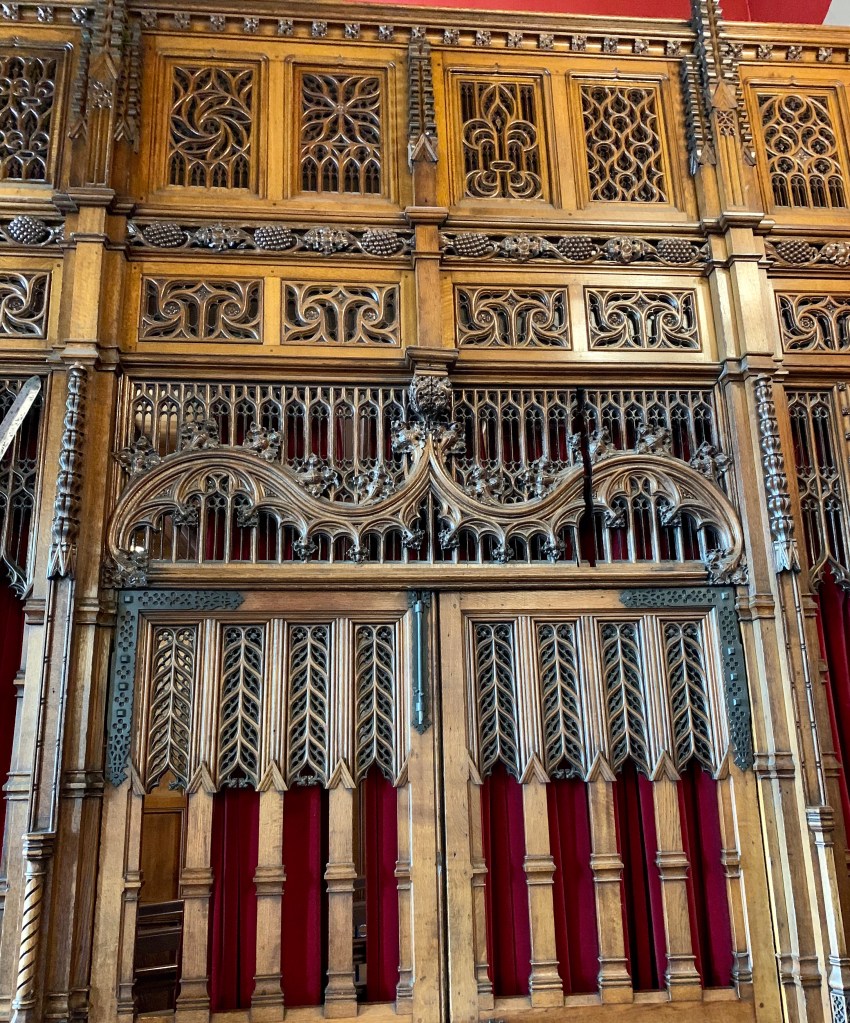
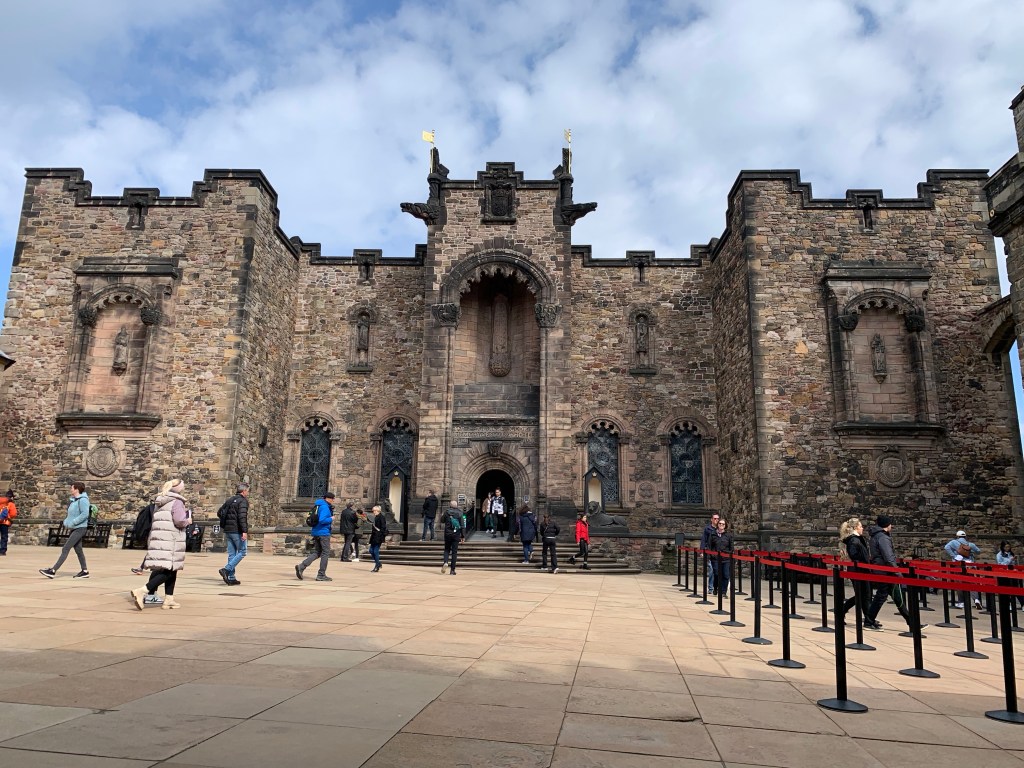
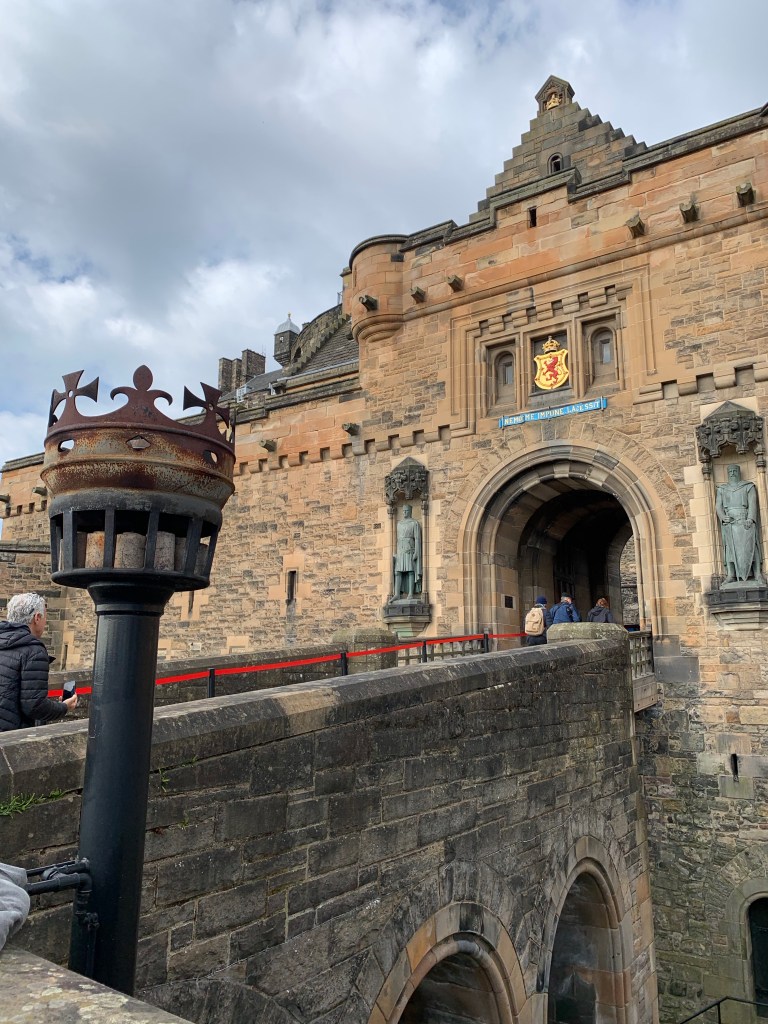
There are several military museums as makes sense since this is a fortress, as well as a royal residence. And evidence of this is everywhere – in the walls, the design of the roads, and in all the canon. The Lion and the Unicorn (horn back, I think), are close ups of those in the entrace of the building in the middle picture. You can barely see them on either side of the doorway.
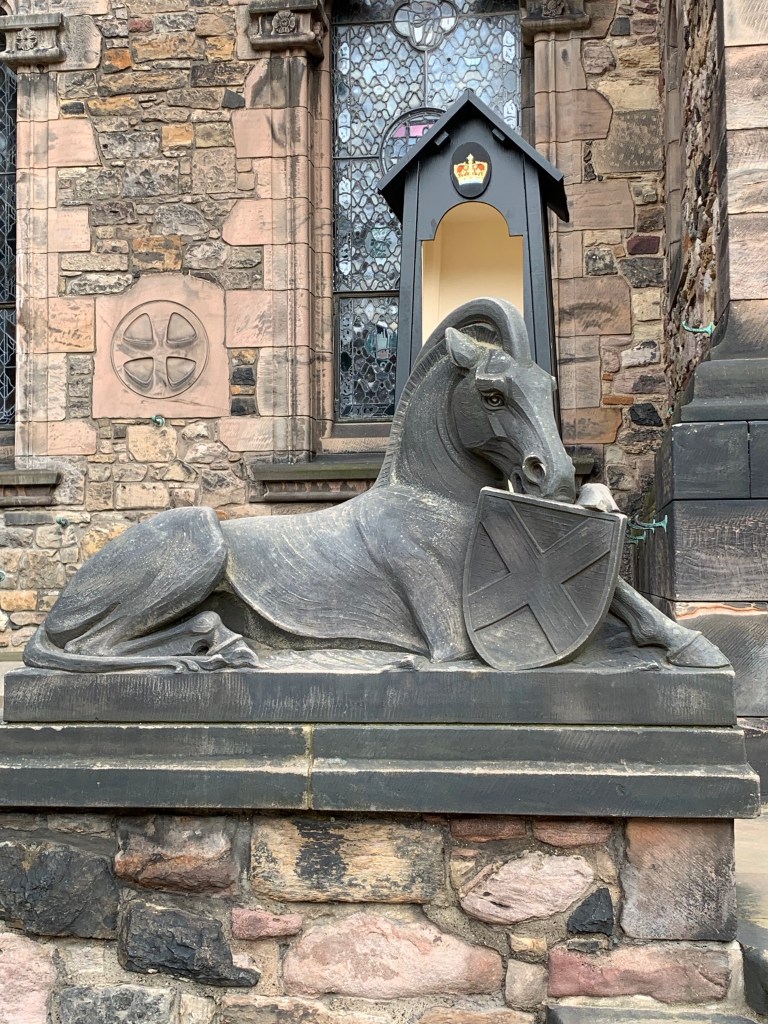

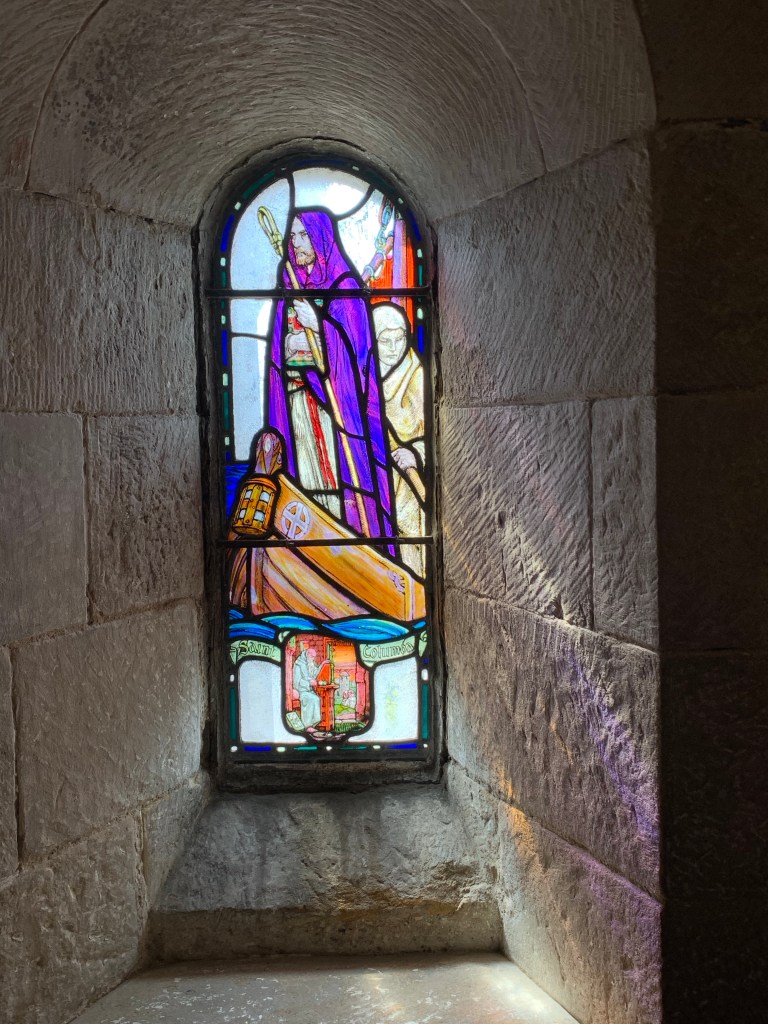
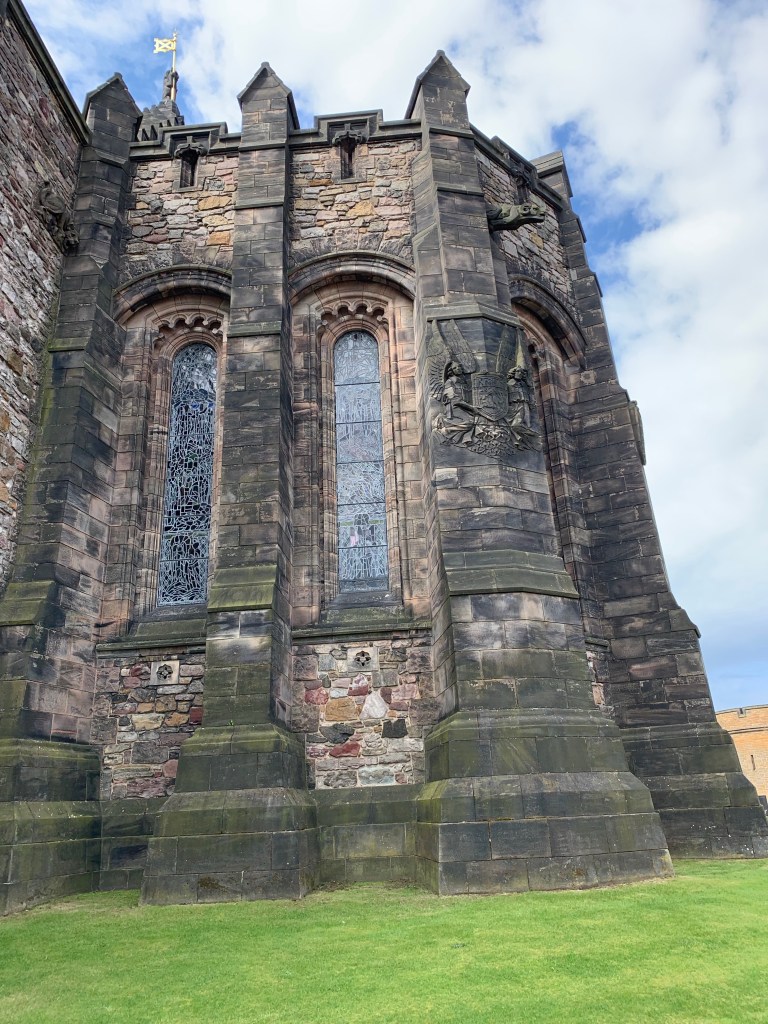
Another spot, one of the highest points actually, is Queen Margaret’s Chapel. This is the oldest surviving building in Edinburgh. Built in the 12th century, it fell into disuse in the reformation. The chapel itself is tiny. But the small stained-glass windows are beautiful, and there is a sense of reverence inside.
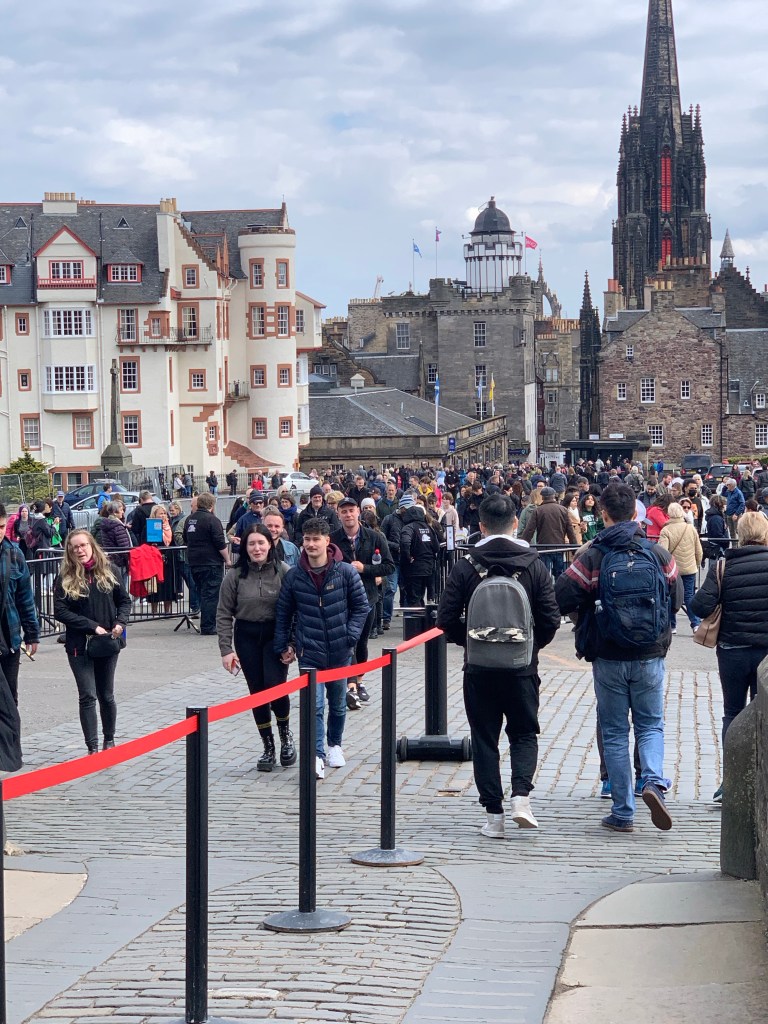
As I worked my way down, enjoying the views, I was glad we came early. The place was packed as I descended, and the lines were building to see the crown jewels. And the people making their way up the hill looked exhausted!
After exploring the castle, I poked around the Royal Mile a bit, then got on the Hop on-Hop off bus to catch the highlights that I had missed. It was well worth it for the information, and a great rest for my feet!
As we were passing the Canongate and the Canongate Kirk (both of which feature prominently in the Niccolo books incidentally), the tour guide told us a story about the Kirk Graveyard. Canongate Kirk is where the Queen and her family worshipped when they were at Holyrood Palace. And in the area of the Kirk and in the graveyard, there are trees that have stood for hundreds of years. On the day Queen Elizabeth died, one of the very old yew trees in the graveyard suddenly split in half, and died. Nothing weather related or anything else. It just split and died. That afternoon, the Queen passed away. You always hear that the monarchy is tied to the land. I guess it’s true!
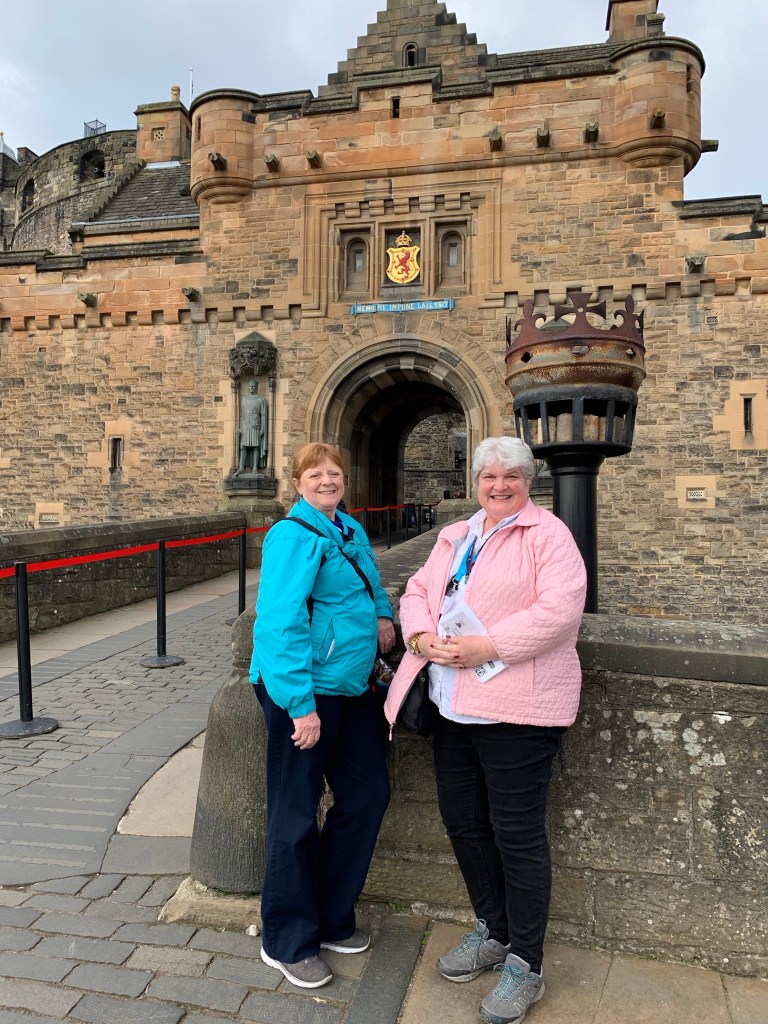
I’ve included several more pictures below, including one of Julie and I at the entrance to the castle.
Tomorrow we head to Holyrood Palace. So until then.
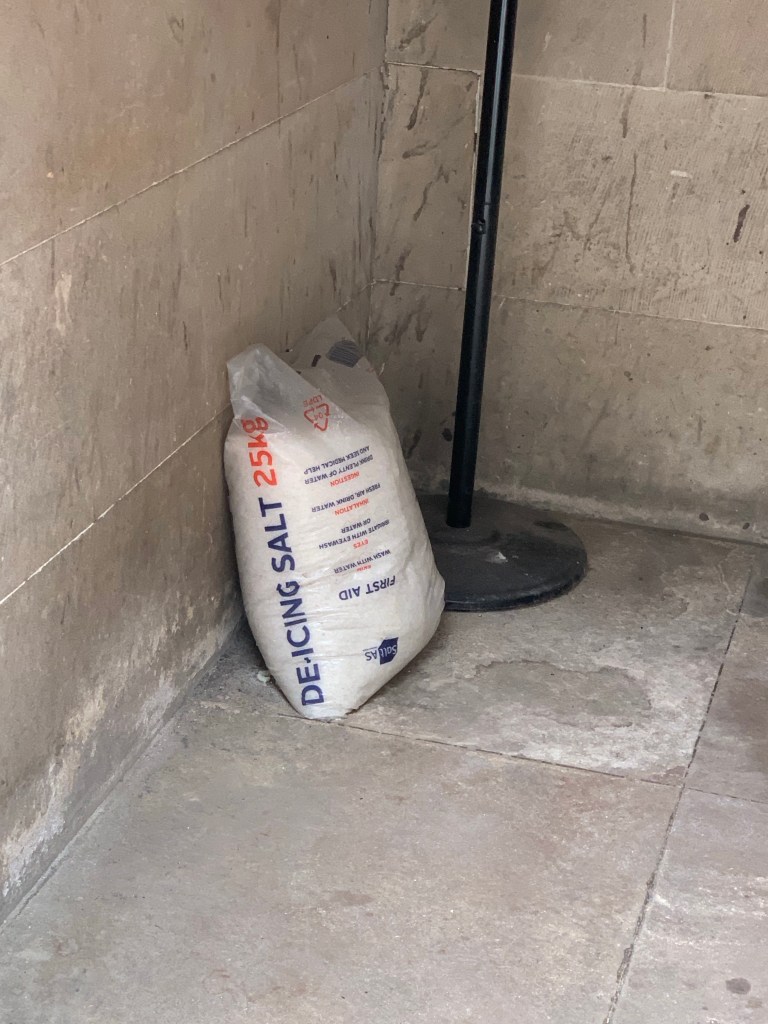
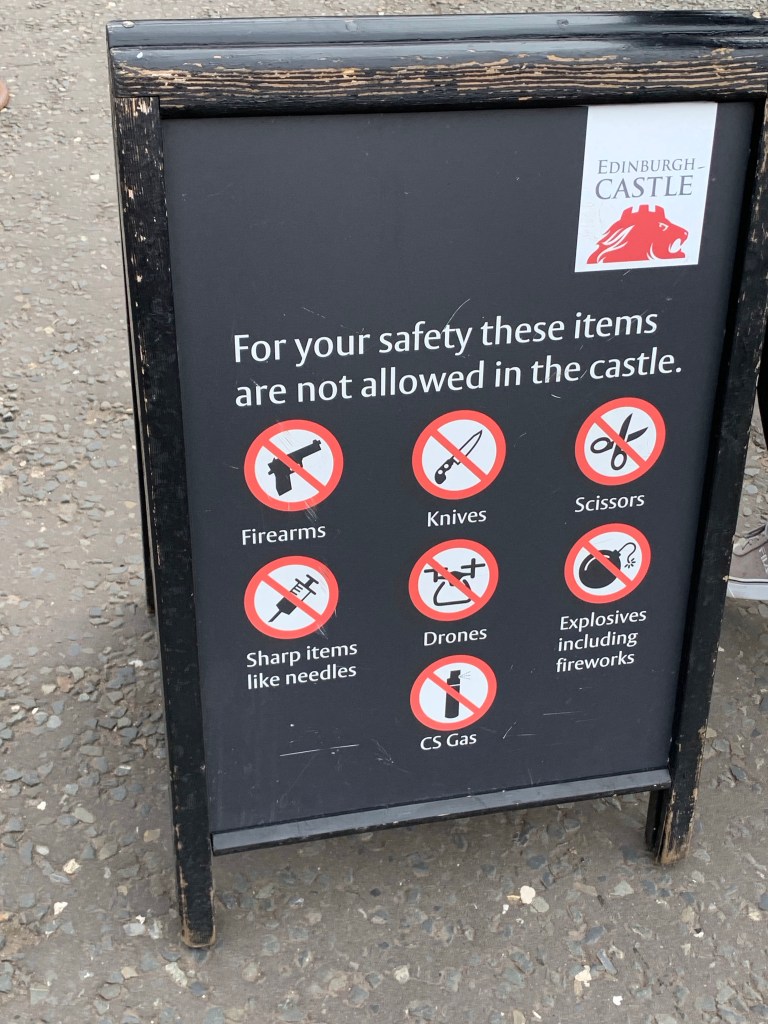
The following two pictures just struck me as amusing. De-icing salt would be a necessity at the castle, and all the items that are not allowed at the castle. I get it, but it’s a fortress! All of these items have been used there at one time or another (except may be drones)!



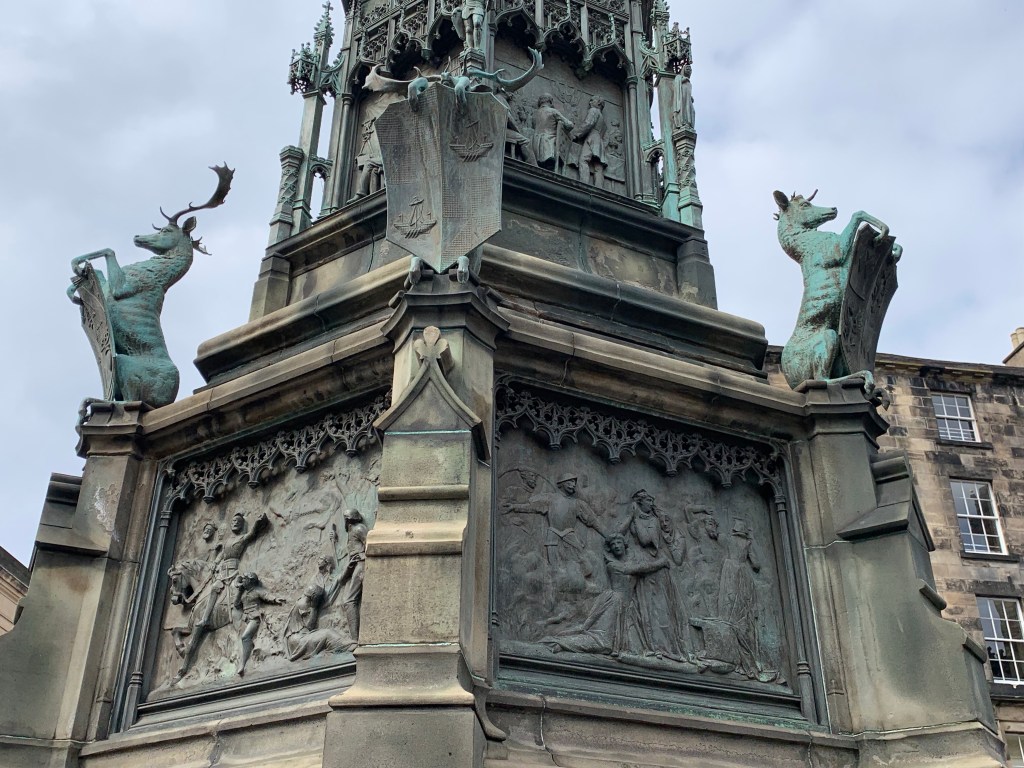
(Detail from a statue outside of St. Giles on the Royal Mile.)
If you look closely on the right side of the horizon, you can see the three peaks of the Queensferry Bridge!
 Suzanne’s Travels
St Margaret’s Chapel in the dark winter with the snow coming down is my favourite time and place in Edinburgh.
LikeLiked by 1 person
I can imagine. It must be beautiful!
LikeLike
The statue is of the 5th Duke of Buccleuch (yes, those ones). The plaques are interesting – well, the ones telling the history of the Scott family are. One of them concerns the burning of Catslack Tower and the death of Lady Buccleuch. Unfortunately, the sculptor didn’t know about the chamber pot used as an offensive weapon during that incident…!
LikeLike
The castle is totally cool and Edinburgh sounds like an amazing place to visit!
LikeLike